
-
Email
-
WhatsApp
-
Address
Zhengzhou, China
Zhengzhou, China
 By Hermione
Marine piping systems operate for extended periods under demanding conditions, including high humidity, salt spray, vibration, fluctuating pressure, and temperature changes. Therefore, the corrosion resistance, mechanical strength, and pressure-bearing capacity of piping materials are directly related to the operational safety and reliability of marine equipment.
Among commonly used stainless steel pipe materials, TP304 seamless stainless steel pipe is a mature and widely available austenitic stainless steel pipe product. It offers stable material properties, good fabrication performance, excellent weldability, and high surface quality. It is widely used in marine auxiliary piping, freshwater systems, cooling-water systems, ventilation systems, and certain industrial fluid-transfer applications.
During the procurement and selection of marine TP304 seamless stainless steel pipes, pressure rating is an important technical consideration. Proper determination of operating pressure, design pressure, pipe wall thickness, and connection method helps ensure safe pipeline operation and avoids leakage, deformation, premature corrosion, or equipment failure caused by unsuitable material selection.
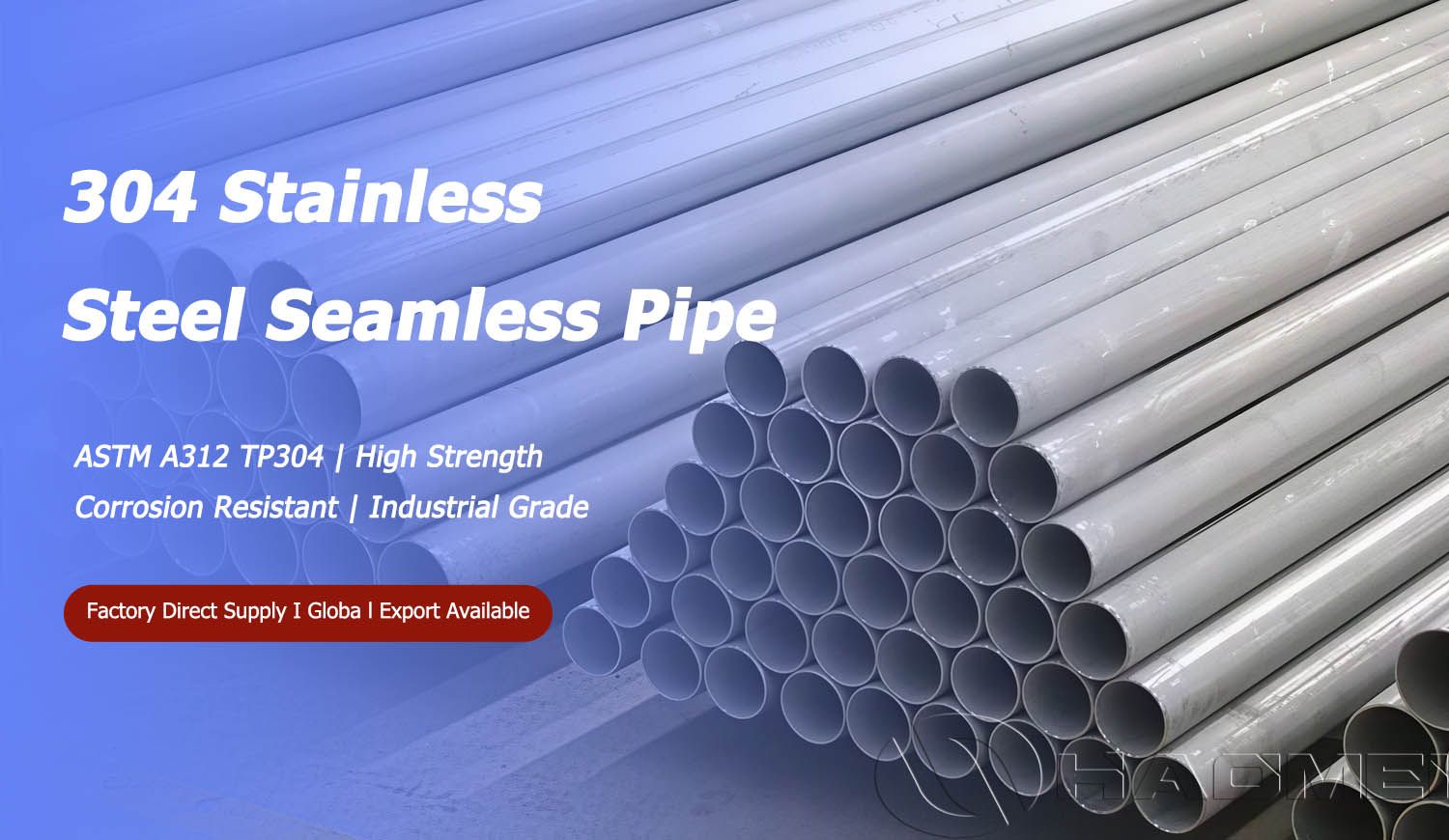
TP304 is a type of austenitic stainless steel, generally referring to Grade TP304 under the ASTM A312 standard. Its chemical composition is primarily based on approximately 18% chromium and 8% nickel. It is broadly comparable to Chinese grade 06Cr19Ni10.
TP304 is widely used in marine-related industries because it combines good formability, weldability, and corrosion resistance. Seamless pipe is produced from solid round billets through piercing, rolling, drawing, or related forming processes. Since the pipe body has no longitudinal weld seam, it avoids potential weak areas associated with the heat-affected zone of welded pipe and provides high structural continuity in pressure-bearing applications.
Good corrosion resistance: Suitable for freshwater, general industrial fluids, air, and many non-aggressive media.
Good mechanical strength: Provides adequate tensile and yield strength for a wide range of industrial piping applications.
Seamless construction: The pipe body has no longitudinal weld, supporting structural integrity and reliability.
Excellent fabrication properties: Easy to cut, bend, flare, expand, and install in piping systems.
Wide service-temperature capability: Suitable for ambient-temperature and certain elevated-temperature applications. The final service temperature must be determined according to applicable design codes.
Cost efficiency: Compared with molybdenum-bearing stainless steels such as TP316 and TP316L, TP304 generally offers a more economical solution in mildly to moderately corrosive environments.
It should be noted that TP304 is not suitable for every seawater environment. When exposed directly to seawater or high-chloride media for long periods, TP304 may be susceptible to chloride-induced pitting corrosion and crevice corrosion. For direct seawater service, high-chloride environments, or highly corrosive marine atmospheres, materials such as TP316L, duplex stainless steel 2205, copper-nickel alloys, or other higher-corrosion-resistance alloys should be evaluated based on actual service conditions.
Under international marine and industrial piping standards, stainless steel pipes are generally not assigned one single fixed pressure rating. Instead, their maximum allowable working pressure is determined by a combination of nominal pipe size, outside diameter, wall thickness, material allowable stress, operating temperature, design code, corrosion allowance, and safety factors.
In practice, the pressure-bearing capability of a marine TP304 seamless pipe is mainly influenced by the following factors.
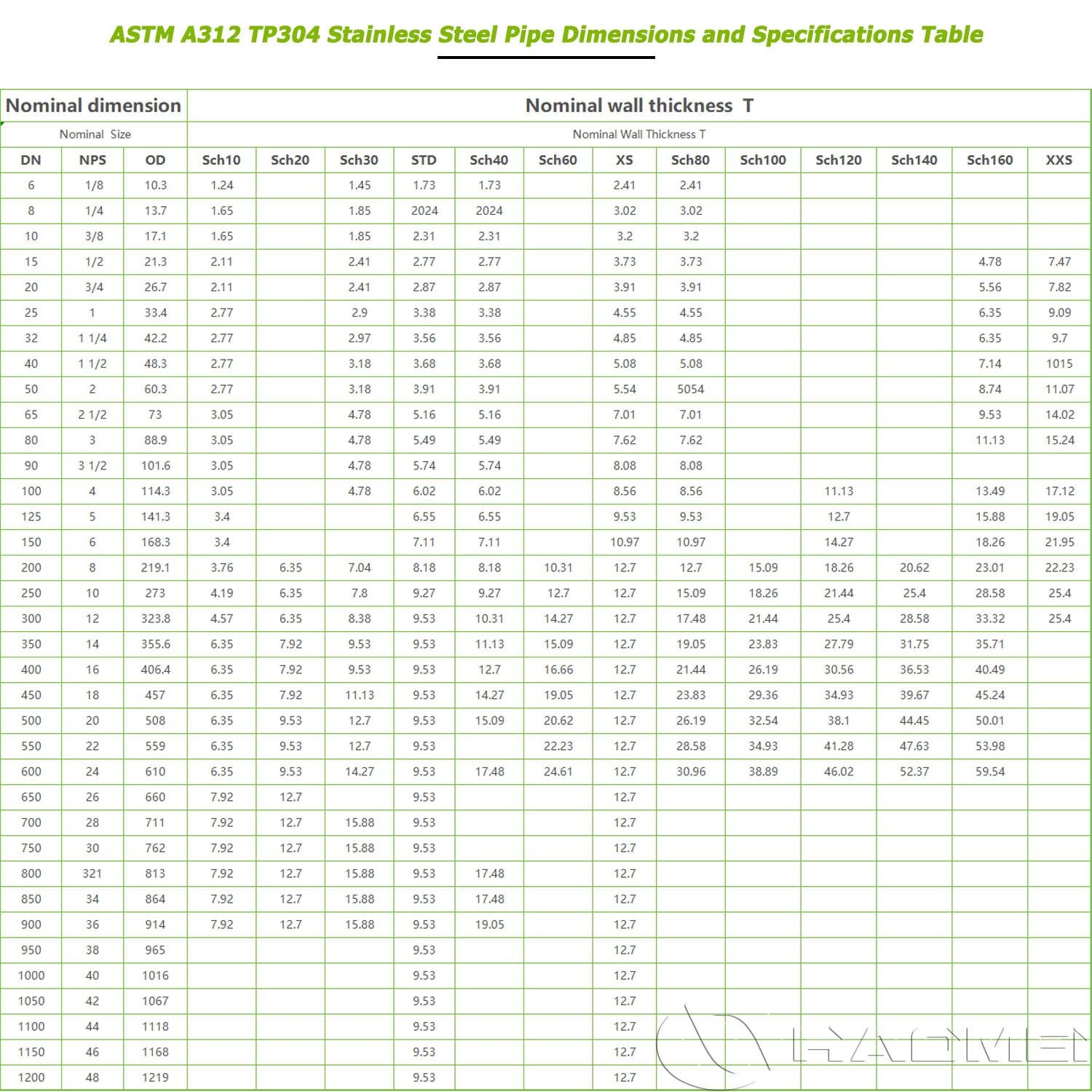
In accordance with ASME B36.19M (standard for stainless steel pipe dimensions) and ASME B36.10M, the common wall thickness schedules for seamless pipes used in marine applications include:
Thin-wall series (for low-pressure systems): Sch 5S and Sch 10S — suitable for ventilation, low-pressure freshwater circulation, sewage, and gravity-flow piping, offering a balance between lightweight design and cost control.
Medium-wall series (for medium-pressure systems): Sch 40S (STD) — the most common standard wall thickness for marine piping, widely used for fuel transfer, ballast water, fire-fighting systems, and general power/utility systems.
Thick-wall and extra-thick-wall series (for high-pressure systems): Sch 80S (XS), Sch 160, and XXS — specifically designed for high-pressure hydraulic transmission, high-pressure air-starting systems, and high-pressure fuel injection and return lines for main and auxiliary engines.
The allowable stress of TP304 stainless steel decreases as service temperature rises. At approximately room temperature, the allowable stress commonly used in ASME-based calculations for TP304 is around 137.9 MPa (20,000 psi), depending on the exact code edition and material condition.
When the system temperature rises, especially above 200°C, the rated pressure capacity must be reduced and calculated according to the applicable code, such as:
ASME B31.3 Process Piping
ASME BPVC requirements
EN 13480 Metallic Industrial Piping
Classification society rules from DNV, ABS, LR, BV, CCS, or other relevant organizations
Project-specific piping specifications
In marine piping systems, pipe wall thickness must be coordinated with the pressure rating of related components, including flanges, valves, fittings, gaskets, and instruments.
Common pressure-rating systems include:
PN Series: PN10, PN16, PN25, PN40, PN63, PN100
ASME Class Series: Class 150, Class 300, Class 600, Class 900
The pressure rating of the entire piping system is determined by its weakest pressure-bearing component. Therefore, a thick-wall pipe alone does not guarantee a high system pressure rating if flanges, valves, fittings, or joints are rated for lower pressure.
| Property | TP304 Seamless Stainless Steel Pipe at 20°C |
| Material Grade | ASTM A312 TP304 |
| Typical Equivalent Grade | 06Cr19Ni10 |
| Product Type | Seamless round pipe |
| Manufacturing Standards | ASTM A312 / ASTM A213 / ASME B36.10 / ASME B36.19M / applicable project standards |
| Available Certifications | ISO, CE, DNV, ABS, LR, BV, CCS, and other project-required certificates |
| Outside Diameter Range | Approx. Ø10 mm to Ø324 mm, customizable |
| Wall Thickness Range | Approx. 1 mm to 30 mm, customizable |
| Standard Lengths | 6 m and 12 m; custom lengths available |
| Surface Finish | Bright annealed, pickled, polished, sandblasted, electropolished, oiled, etc. |
| Minimum Yield Strength | 205 MPa |
| Minimum Tensile Strength | 515 MPa |
| Minimum Elongation | 40%, depending on applicable standard and test method |
| Hardness | Approx. 140–200 HB |
| Density | Approx. 8.0 g/cm³ |
| Thermal Expansion Coefficient, 20–100°C | Approx. 16.5 × 10⁻⁶ /°C |
| Thermal Conductivity at 100°C | Approx. 16 W/(m·K) |
| Electrical Conductivity | Approx. 1.45 × 10⁷ S/m |
| Packaging | Wooden cases, steel pallets, plastic protection sleeves, seaworthy export packaging |
1. Allowable Stress
At approximately 20°C, the allowable stress for TP304 stainless steel used in certain ASME design calculations is about 138 MPa, or approximately 20 ksi.
As the temperature increases, the allowable stress decreases. The applicable value should be taken from the current edition of the relevant design code, such as ASME B31.3, ASME BPVC, EN 13480, or applicable marine classification rules.
2. Pipe Pressure Calculation Formula
For straight pipe under internal pressure, the following ASME-style formula may be used as a reference:
[
P=\frac{2SEWt}{D-2Yt}
]
Where:
P = Design pressure
S = Allowable stress of the material at design temperature
E = Quality factor
W = Weld joint strength reduction factor
t = Effective wall thickness used for calculation
D = Outside diameter of the pipe
Y = Coefficient determined by material and temperature
For seamless pipe, the weld quality factor may differ from welded-pipe values, but the final calculation must still consider manufacturing tolerance, wall-thickness negative tolerance, corrosion allowance, mechanical allowance, thread or groove allowance where applicable, and the requirements of the selected design code.
The following figures are for general reference only. Actual allowable working pressure must be verified by a qualified piping engineer according to design temperature, corrosion allowance, dimensional tolerance, code requirements, end connections, pressure testing requirements, and marine classification rules.
NPS / DN | OD (mm) | SCH 10S Wall Thickness (mm) | SCH 10S Reference Pressure | SCH 40S Wall Thickness (mm) | SCH 40S Reference Pressure | SCH 80S Wall Thickness (mm) | SCH 80S Reference Pressure |
| 1/2" / DN15 | 21.3 | 2.11 | Approx. 24.8 MPa / 248 bar | 2.77 | Approx. 33.6 MPa / 336 bar | 3.73 | Approx. 47.3 MPa / 473 bar |
| 1" / DN25 | 33.4 | 2.77 | Approx. 20.5 MPa / 205 bar | 3.38 | Approx. 25.5 MPa / 255 bar | 4.55 | Approx. 35.6 MPa / 356 bar |
| 2" / DN50 | 60.3 | 2.77 | Approx. 11.0 MPa / 110 bar | 3.91 | Approx. 15.9 MPa / 159 bar | 5.54 | Approx. 23.2 MPa / 232 bar |
| 4" / DN100 | 114.3 | 3.05 | Approx. 6.3 MPa / 63 bar | 6.02 | Approx. 12.8 MPa / 128 bar | 8.56 | Approx. 18.7 MPa / 187 bar |
| 6" / DN150 | 168.3 | 3.40 | Approx. 4.8 MPa / 48 bar | 7.11 | Approx. 10.2 MPa / 102 bar | 10.97 | Approx. 16.2 MPa / 162 bar |
Important: These pressure values are theoretical reference values rather than guaranteed service ratings. Pipe pressure ratings must not be selected solely from this table. Final design should be based on approved engineering calculations and the requirements of the vessel owner, shipyard, design institute, and classification society.
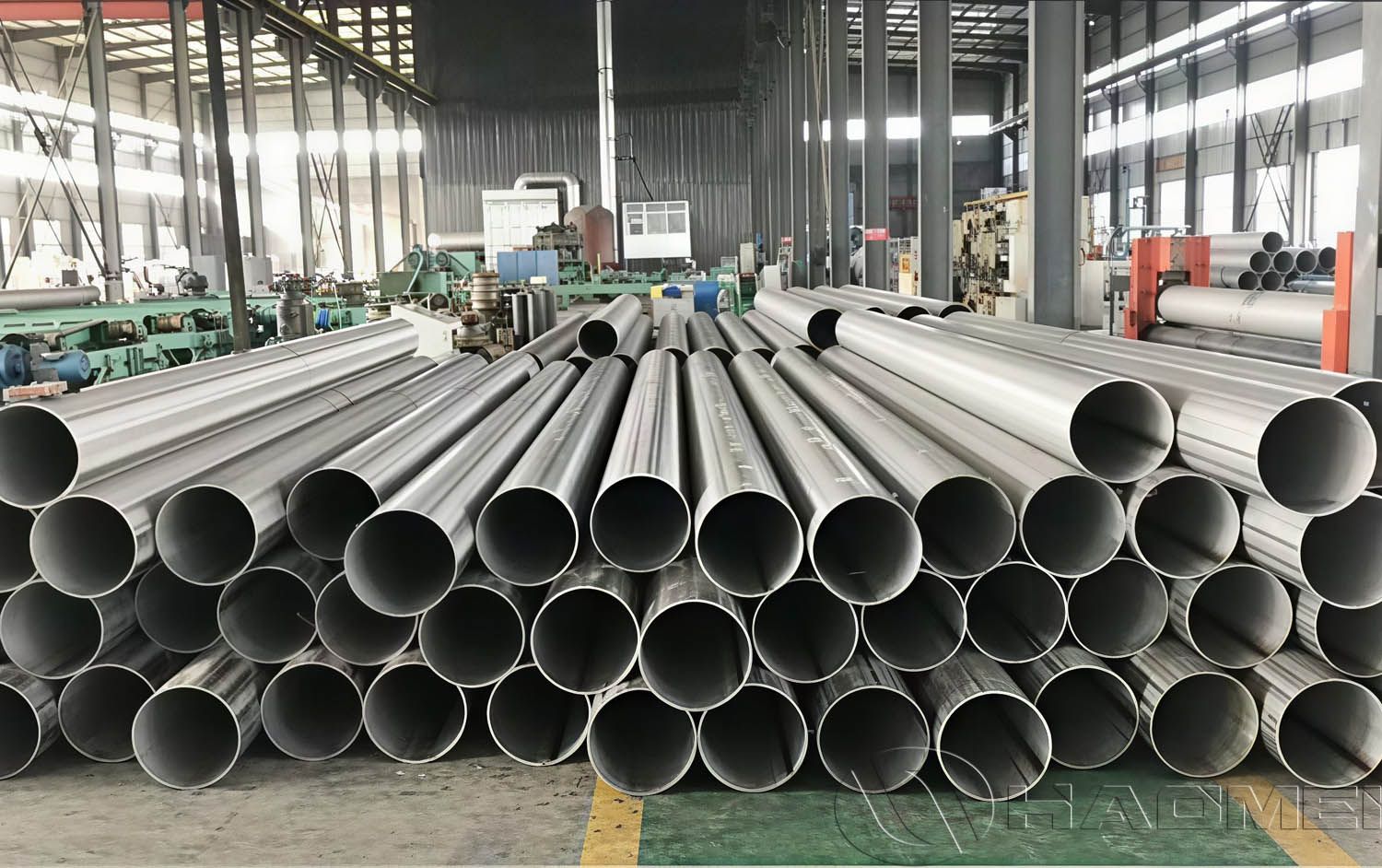
Depending on pipe size, wall thickness, design pressure, operating temperature, and fluid medium, TP304 seamless stainless steel pipe can be used in selected marine systems.
Fuel and Lubricating Oil Systems
TP304 seamless pipe may be used in properly designed fuel supply, lubricating oil circulation, cooling, and auxiliary equipment piping systems where the fluid medium and corrosion conditions are suitable.
Smooth internal surfaces can help reduce contamination risks in systems connected to precision pumps, injectors, bearings, and filtration equipment.
Hydraulic and Pneumatic Control Lines
For high-pressure hydraulic systems, steering gear piping, deck crane lines, winch systems, and compressed-air control piping, small-diameter heavy-wall seamless tubing may be selected where permitted by engineering requirements.
Typical examples include outside diameters from 6 mm to 42 mm with wall thicknesses of approximately 1.5 mm to 6 mm, depending on the pressure requirement.
Freshwater and Domestic Water Systems
TP304 seamless stainless steel pipe is commonly suitable for freshwater transfer, domestic water piping, boiler feedwater-related auxiliary lines, and jacket-water cooling systems, provided that the water chemistry and operating conditions are compatible with TP304.
Inert Gas and Firefighting Systems
TP304 pipe may be considered for selected inert gas, deck utility, and firefighting applications where material selection is approved by the relevant project requirements and classification regulations.
For systems exposed directly to seawater, chloride-rich water, or highly corrosive marine conditions, TP316L, duplex stainless steel, copper-nickel alloys, or other suitable materials should be assessed instead.
TP304
TP304 is suitable for freshwater, air, general industrial media, and non-aggressive environments. It offers a balanced combination of performance, availability, and cost.
TP304L
TP304L has a lower carbon content than TP304. It offers improved resistance to sensitization and intergranular corrosion after welding, making it suitable for systems involving extensive welding where post-weld solution annealing is not practical.
TP316L
TP316L contains molybdenum, providing better resistance to chloride-induced pitting and crevice corrosion than TP304 and TP304L. It is generally more suitable for salt spray, chloride-containing media, marine atmospheres, and more demanding corrosion conditions.
For ordinary marine equipment piping, freshwater systems, and general auxiliary lines, TP304 seamless stainless steel pipe may be a cost-effective choice. However, where chloride concentration is high or where the piping is exposed to seawater, salt spray, or persistent wet marine conditions, TP316L or a higher-corrosion-resistance material should be evaluated.
Selection Factor | Recommendation |
| Pressure Requirement | Select wall thickness based on approved internal pressure calculations, design code, corrosion allowance, and safety factors. |
| Temperature Environment | For elevated-temperature service, confirm allowable stress and oxidation resistance according to the applicable design code. TP321 or TP347 may be considered for certain high-temperature applications. |
| Corrosion Environment | TP304 is suitable for freshwater and general non-aggressive media. For direct seawater or chloride-rich service, consider TP316L, duplex stainless steel, or copper-nickel alloys. |
| Budget | TP304 is often an economical option for suitable non-chloride or low-corrosion environments. |
| Installation Requirements | TP304 provides good weldability and fabrication performance for marine piping installation. |
| Certification Requirements | Select suppliers capable of providing material certificates and required approvals from DNV, ABS, LR, BV, CCS, or other classification societies. |
Q1. What is the pressure rating of TP304 seamless stainless steel pipe?
A1. The pressure rating of TP304 seamless stainless steel pipe depends on outside diameter, wall thickness, design temperature, allowable stress, corrosion allowance, end connections, and the applicable design code. There is no single fixed pressure rating for all TP304 pipes. Engineering calculation is required to determine the allowable working pressure.
Q2. Is TP304 seamless stainless steel pipe suitable for marine environments?
A2. TP304 can be used in certain marine auxiliary piping systems, freshwater lines, and general industrial fluid-transfer systems. However, because it may be susceptible to chloride-induced pitting and crevice corrosion, it is generally not recommended for long-term direct exposure to seawater or highly concentrated chloride media.
Q3. What is the difference between SCH 10S, SCH 40S, and SCH 80S?
A3.The main difference is wall thickness. SCH 10S has a relatively thin wall, SCH 40S has a medium wall thickness, and SCH 80S has a thicker wall. Under otherwise identical conditions, a thicker wall usually provides higher pressure-bearing capability.
Q4. Which standards apply to TP304 seamless stainless steel pipe?
A4.ASTM A312/A312M is one of the most common standards covering seamless, welded, and heavily cold-worked austenitic stainless steel pipes, including TP304. Pipe dimensions may be referenced in ASME B36.19M and ASME B36.10M, while pressure design should follow the applicable piping code or marine classification requirements.
Q5. Can TP304 seamless stainless steel pipe be customized?
A5.Yes. TP304 seamless stainless steel pipe can be supplied in different outside diameters, wall thicknesses, lengths, and surface finishes. SCH 10S, SCH 40S, SCH 80S, and other customized dimensions can be provided according to project requirements.
Q6. What documents are required for marine stainless steel pipe orders?
A6.Typical documents include a material test certificate, chemical composition report, mechanical property report, dimensional inspection report, hydrostatic or non-destructive testing records, and packing list. Depending on the project, ship classification certificates or third-party inspection documents may also be required.
 01
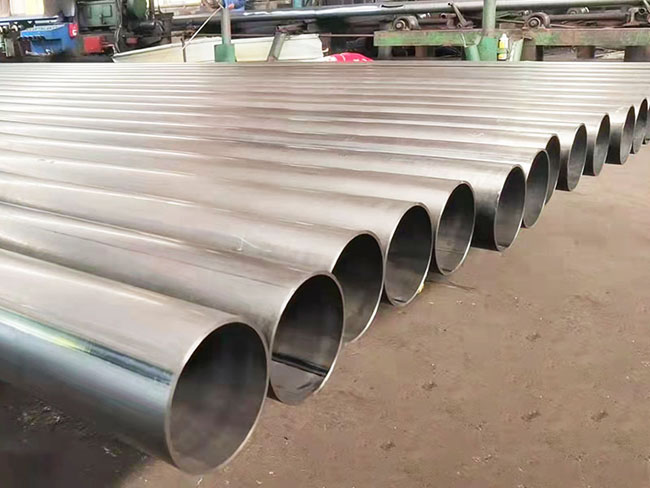
TP304 stainless steel seamless pipe (ASTM A312/A213 TP304) is one of the most widely used austenitic stainless steel pipes in industrial applications. With its excellent corrosion resistance, outstanding workability, and stable performance in both high an
 02
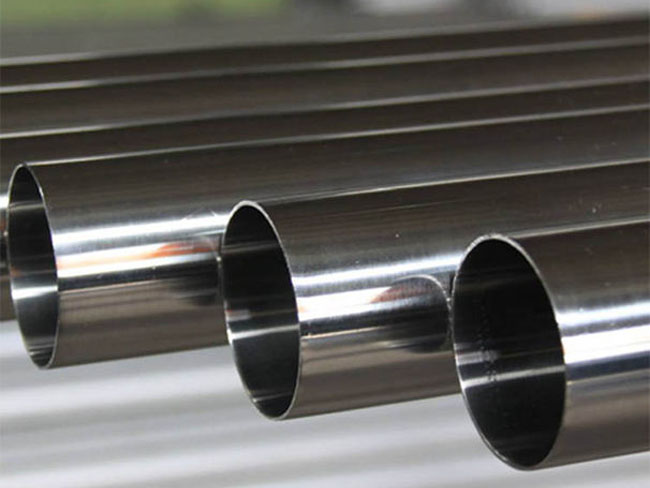
Austenitic seamless stainless steel pipe refers to seamless steel tubing whose microstructure remains stable austenite at room temperature. These steels typically use chromium and nickel as the primary alloying elements. A typical example is 18Cr-8Ni (Gra
 03
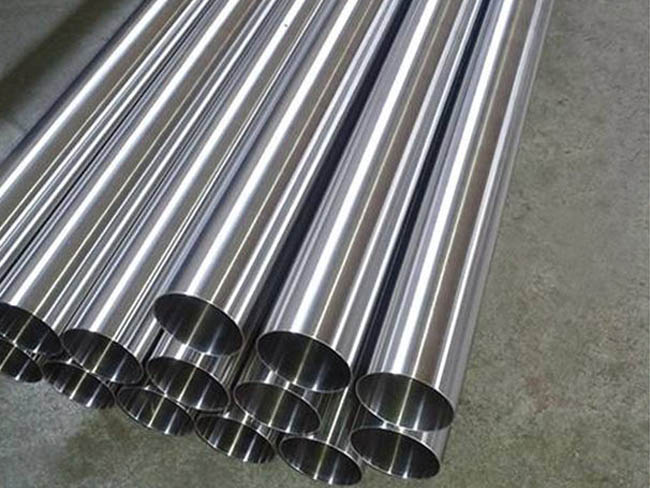
Duplex stainless steel pipe consists of approximately equal proportions of ferrite and austenite stainless steel phases. It combines the high strength of ferritic stainless steel with the toughness of austenitic stainless steel. Its yield strength is gene
 04
TP316 seamless stainless steel pipe offers excellent corrosion resistance and strength for chemical, marine, food, and petrochemical applications. Manufactured to ASTM A312, A213, and EN 10216-5 standards with customizable sizes and finishes.