
-
Email
-
WhatsApp
-
Address
Zhengzhou, China
Zhengzhou, China
 By Hermione
Marine engineering and large-scale vessel construction projects must operate under harsh conditions, including salt spray and seawater corrosion, cyclic wave loads, alternating high and low temperatures, and complex pipeline media. The corrosion resistance, mechanical stability, and weldability of piping materials directly affect the service life of onboard systems and navigation safety.
For 1.5-million-ton-class shipbuilding projects, ocean-going cargo vessels, and offshore platform piping systems, 316L and 304L stainless steel seamless pipes have become preferred materials due to their mature and reliable overall performance. They are widely used in ballast water systems, fire-fighting pipelines, fuel and lubricating oil lines, seawater cooling systems, and deck process piping.
As a professional manufacturer and supplier of marine stainless steel seamless pipes, HAOMEI PIPE supplies products manufactured in accordance with GB/T 14976, ASTM A312, ASTM A269, and other domestic and international standards. Our products can meet the requirements of major classification societies, including CCS, DNV, ABS, LR, and BV, providing dependable piping solutions for large vessel construction and offshore engineering projects.
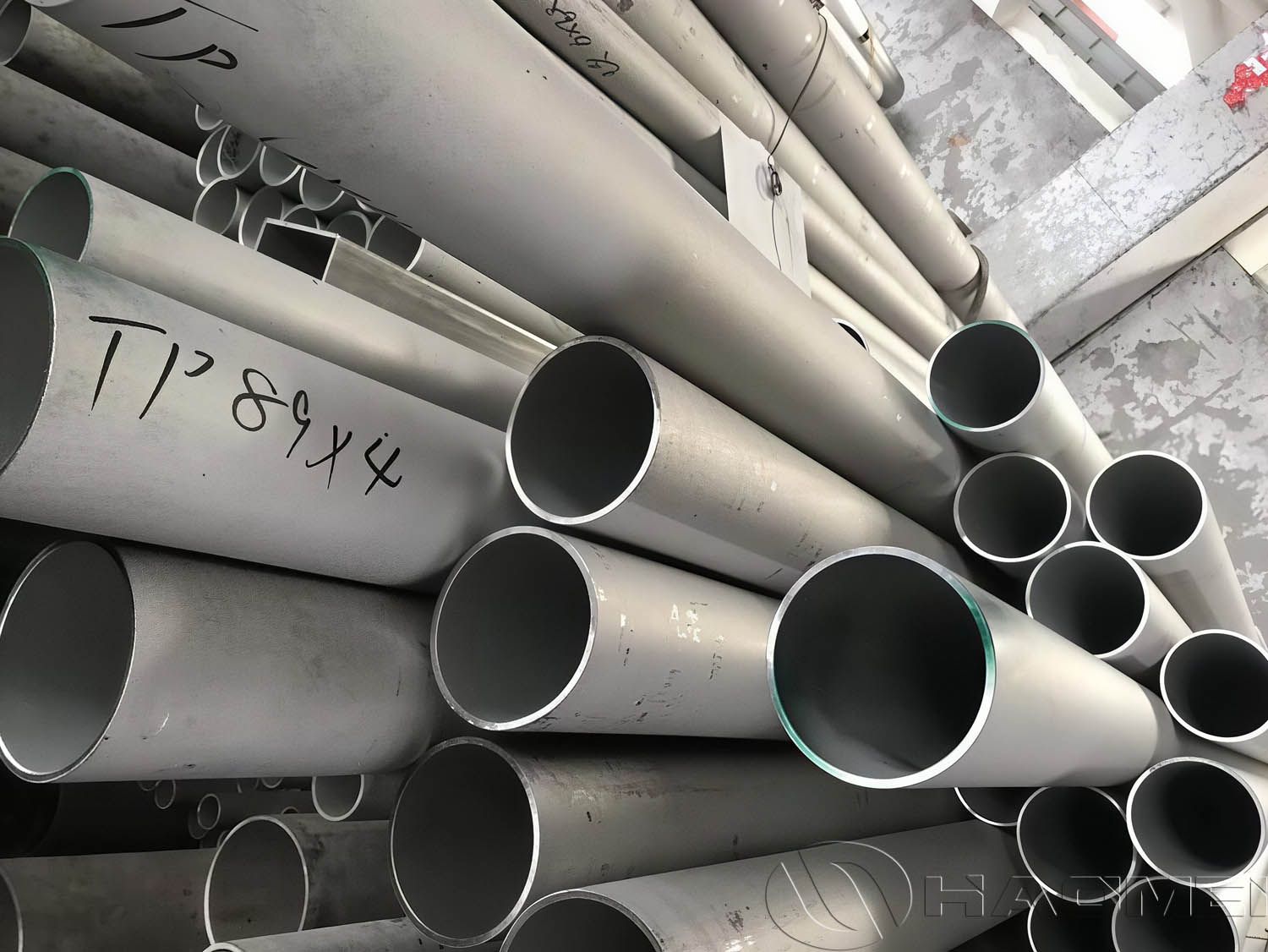
304L is a low-carbon austenitic stainless steel. Its low-carbon composition effectively reduces the risk of intergranular corrosion after welding, making it a widely used general-grade stainless steel seamless pipe for marine applications.
Corrosion Resistance:
It performs well in freshwater, mild salt-spray environments, and general atmospheric corrosion conditions. It also offers good resistance to weak acids and neutral media.
Fabrication Performance:
304L provides excellent ductility and can be bent, expanded, beveled, and welded easily. Post-weld solution annealing is generally not required, making on-site installation more convenient.
Typical Applications:
Freshwater supply pipelines on vessels
Internal ventilation auxiliary piping
Freshwater fire-fighting pipelines
Non-immersed deck auxiliary piping
Equipment connection pipes for marine systems
Limitations:
In environments with continuously high chloride concentrations or long-term seawater immersion, 304L has limited resistance to pitting corrosion. It is therefore not recommended as the primary material for pipelines continuously exposed to seawater.
316L contains molybdenum and has a low-carbon composition. It is a primary material for corrosion-critical marine applications and a preferred option for seawater piping in large-scale shipbuilding projects.
Corrosion Resistance:
The addition of molybdenum significantly improves resistance to chloride-induced pitting corrosion and crevice corrosion. Its resistance to seawater corrosion and sulfide corrosion is substantially better than that of 304L. It also has excellent resistance to intergranular corrosion and provides reliable performance at welded joints.
Mechanical Performance:
316L maintains stable mechanical properties at elevated temperatures and offers good fatigue resistance and impact resistance. It is suitable for continuous vibration and pressure fluctuation conditions during vessel operation.
Typical Applications:
Seawater cooling systems
Ballast water pipelines
Seawater spray systems
Marine chemical dosing and chemical transfer lines
Offshore platform deck piping
Auxiliary piping systems for LNG vessels
Bilge drainage lines containing saline water
Key Advantage:
In high-salinity offshore environments, 316L offers a longer service life and can significantly reduce future inspection, maintenance, and replacement costs. It is especially suitable for large vessels operating on long-distance ocean routes.
Material Selection Summary
For freshwater systems and general auxiliary pipelines inside vessels, 304L is often selected to help control project costs. For pipelines in direct contact with seawater or high-chloride media, 316L should be prioritized to ensure long-term operating safety and reliability.
| Item | Parameter Range |
| Product Name | 304L / 316L Stainless Steel Seamless Pipe |
| Material Grade | TP304L / TP316L |
| UNS Grade | S30403 / S31603 |
| Main Standards | ASTM A312 / ASME SA312 |
| Outside Diameter | Φ6 mm–Φ630 mm |
| Wall Thickness | 0.5 mm–40 mm |
| Length | Fixed lengths of 6 m / 9 m / 12 m, customizable upon request |
| Manufacturing Process | Hot extrusion + cold rolling/cold drawing seamless forming. No weld seam, helping avoid potential weld-related failures in vibration and corrosive environments. |
| Delivery Condition | Solution annealed + pickled and passivated / bright annealed |
| Available Standards | GB/T 17395, ASTM A312, ASTM A213, EN 10216-5; customized to DNV, LR, CCS, and other classification society requirements |
Marine environments are considerably more demanding than land-based conditions. Therefore, stainless steel seamless pipes used in marine engineering must meet several critical requirements.
1. Chloride Corrosion Resistance
Seawater and marine atmospheres contain high levels of chloride ions. Chlorides are among the primary causes of pitting corrosion, crevice corrosion, and stress corrosion cracking in stainless steel.
If a pipe does not have sufficient chloride corrosion resistance, corrosion perforation may occur after only a few years of service, directly threatening the overall safety and reliability of the project. This is the first and most important material-selection requirement for marine engineering.
2. High Strength and Pressure Resistance
Marine pipelines must withstand seawater pressure and structural stresses from offshore platforms. Some oil and gas transmission lines must also resist high internal medium pressure.
Therefore, pipes must have adequate strength, impact resistance, and long-term pressure-bearing capability to prevent deformation, cracking, or failure under sustained operating loads.
3. Long-Term Stability and Low Maintenance Requirements
Most offshore engineering projects are located far from shore, where maintenance is difficult and costly. Once a pipeline fails, the cost of repair or replacement can be far higher than the initial difference in material cost.
For this reason, marine piping materials should be selected based on total life-cycle cost rather than initial purchase price alone. Long-term stable operation and reduced maintenance frequency are essential.
4. Large-Diameter and Heavy-Wall Customization Capability
Deep-sea and ultra-large offshore projects often require large-diameter and heavy-wall seamless pipes. Manufacturers must therefore have strong production capacity and advanced process capabilities to meet customized size and performance requirements.
In summary, stainless steel seamless pipes for marine engineering must balance corrosion resistance, mechanical strength, long-term reliability, and dimensional adaptability. All of these requirements are essential.
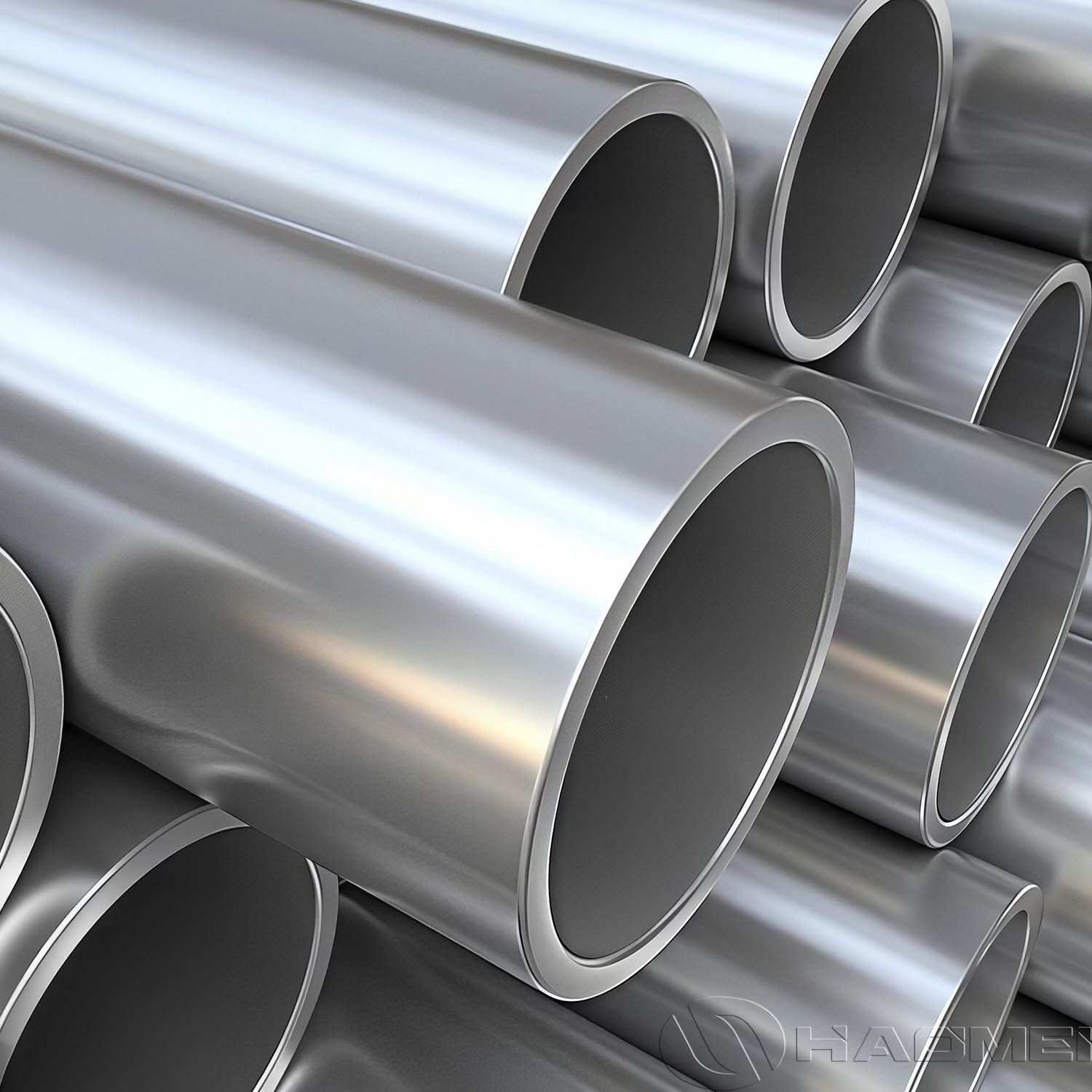
1. Surface Treatment Defines the Corrosion-Resistance Foundation
The corrosion resistance of stainless steel pipe depends heavily on surface quality. Surface treatment includes pickling and passivation, finishing, and control of surface roughness and cleanliness.
For pipes requiring resistance to stress corrosion, pitting corrosion, or thermo-mechanical fatigue, surface treatment is particularly important. Cold-drawn or cold-sized/finished welded pipes can also achieve surface quality suitable for precision applications and may, in some cases, provide better surface quality than seamless steel pipes.
2. Welding Methods Must Match Wall Thickness and Material Grade
For austenitic or duplex stainless steel pipes with wall thicknesses of 3–7 mm, GTAW and its derived PAW processes are generally preferred.
For thick-wall welded pipes, combined welding methods such as PAW/GTAW or GTAW plus flux-cored arc welding (FCAW) may be used.
Special attention should be paid to duplex stainless steel welded pipe production: GMAW/FCAW processes have generally been phased out for this application.
3. Special Applications Require Dedicated Welding Procedures
For example, 316L stainless steel coils used to heat crude oil on large oil tankers—typically with dimensions of Φ42–60 mm × 2.0–2.8 mm—require strict passivation treatment of butt welds.
During LNG carrier construction, when welding 9% nickel steel LNG tanks to external TP316L stainless steel piping, dedicated welding procedures must be developed. Standard welding parameters should not be applied without qualification.
Seawater Piping Systems:
Used in ballast water systems, seawater cooling systems, and seawater fire-fighting pipelines. It withstands long-term seawater flushing and electrochemical corrosion.
Chemical Tanker Cargo Piping Systems:
Resistant to a wide range of acidic and alkaline media, helping meet the strict requirements of the IMO for chemical transportation.
Hydraulic and Instrument Tubing:
Suitable for high-pressure hydraulic systems and instrumentation signal lines where both high cleanliness and corrosion resistance are required.
LNG Carrier Low-Temperature Piping:
Provides material toughness and reliability under cryogenic operating conditions.
Ballast Water and Fire-Fighting Systems:
Suitable for ballast and fire-water piping under general marine environmental conditions.
Domestic Water and Ventilation Systems:
Used for freshwater supply, domestic wastewater piping, and engine room ventilation systems.
Deck Drainage and Scupper Systems:
Suitable for exposed deck drainage pipelines, with good resistance to atmospheric corrosion.
General Process Piping:
Used for auxiliary fuel oil lines, lubricating oil lines, and other pipelines conveying non-aggressive media in engine rooms.
Q: Must 316L always be used for marine seawater pipelines?
A: For pipelines with continuous seawater flow or long-term immersion exposure, 316L is recommended. For internal vessel pipelines with only intermittent seawater contact or lower salt-spray concentrations, 304L may be selected after proper engineering evaluation to control the project budget.
Q: Can seamless pipes be supplied with classification society certification?
A: Yes. Products can be supplied in accordance with inspection and certification requirements from CCS, DNV, and other classification societies. Please specify certificate requirements before placing an order.
Q: Can the pipes be degreased for marine oil pipeline applications?
A: Yes. Degreasing and cleaning treatment can be provided to meet cleanliness requirements for lubricating oil and fuel oil piping systems.
Q: What are the minimum and maximum available sizes?
A: Standard outside diameters range from 6 mm to 426 mm. Special ultra-large or ultra-small sizes can be discussed and customized according to project requirements.
 01
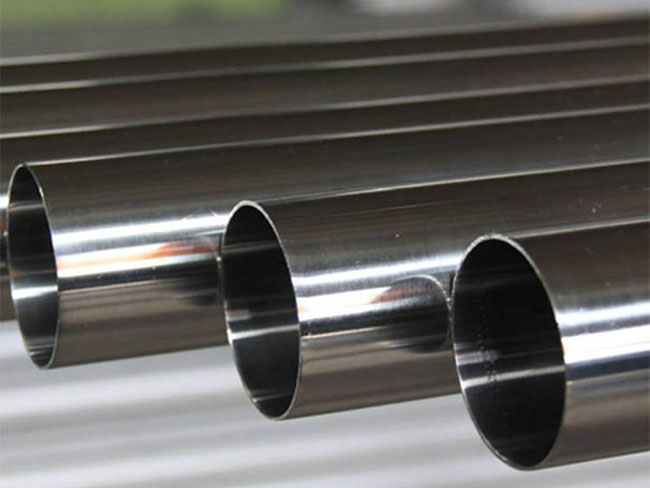
Marine seamless stainless steel pipes are manufactured from austenitic stainless steels such as 304, 304L, 316, and 316L. They feature excellent seawater corrosion resistance and high structural strength, and are widely used in ship piping systems, seawat
 02
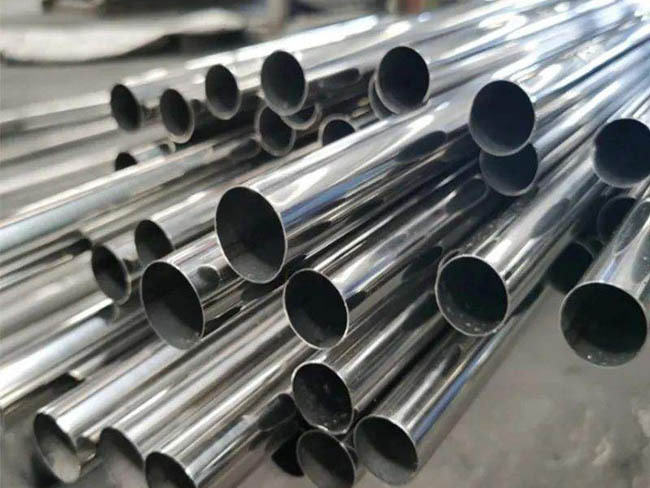
Small diameter seamless steel tubes refer to steel pipes with a relatively small outer diameter and a seamless structure without welding joints. The typical outer diameter range is 6 mm–89 mm. These pipes are manufactured through processes such as piercin
 03
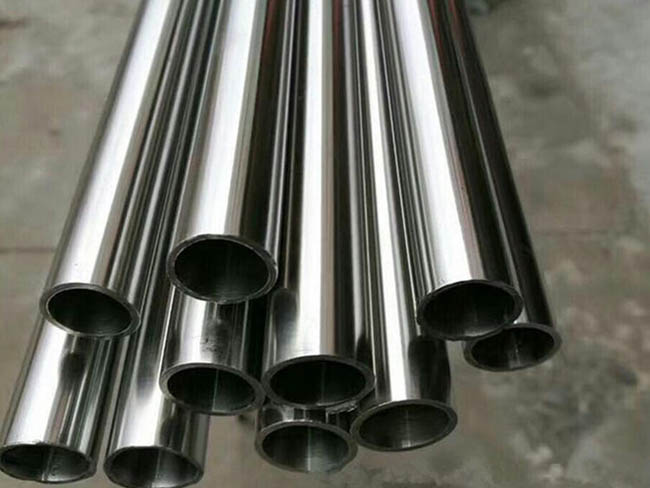
304L stainless steel pipe is produced from the low-carbon version of the widely used austenitic 18-8 stainless steel. The reduced carbon content allows it to be welded without causing localized corrosion. This is because 304L stainless steel produces less
 04
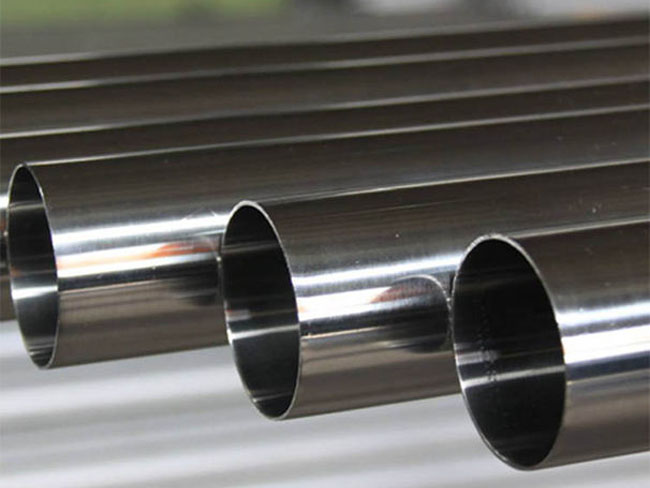
TP316L seamless stainless steel pipe conforms to ASTM A312, A213 and A269 standards, and has excellent corrosion resistance and low carbon welding performance, making it suitable for the chemical, shipbuilding, pharmaceutical and food industries.