
-
Email
-
WhatsApp
-
Address
Zhengzhou, China
Zhengzhou, China
 By Hermione
The marine environment is highly corrosive, characterized by chloride ions, salt spray, alternating wet and dry conditions, and temperature fluctuations. Once corrosion or leakage occurs in a ship piping system, it may cause maintenance downtime and voyage delays; in severe cases, it can even lead to safety incidents.
For ocean-going cargo vessels, chemical tankers, yachts, offshore platform support projects, and other marine applications, 316L and 304L stainless steel seamless pipes supplied under BV (Bureau Veritas) factory approval are frequently specified by international shipyards, shipowners, and design institutes.
Unlike ordinary civilian or general industrial stainless steel pipes, marine BV seamless pipes are controlled throughout the complete manufacturing process—from steelmaking and rolling to heat treatment and full inspection—in accordance with applicable BV marine rules. Formal marine inspection certificates can be issued where required, helping meet delivery requirements for global shipbuilding projects.
BV is the abbreviation for Bureau Veritas, a globally recognized classification society and inspection and certification organization. During shipbuilding, products used in hull structures, machinery, pressure systems, and related piping systems may need to be reviewed and inspected in accordance with applicable BV classification rules and project requirements.
BV-certified marine stainless steel seamless pipes refer to stainless steel pipes manufactured in accordance with applicable classification society rules, product standards, and project technical specifications, and subjected to the required inspection, verification, and documentation review.
Compared with standard industrial stainless steel pipes, BV marine seamless pipes place greater emphasis on:
Material quality consistency
Dimensional accuracy
Mechanical properties
Corrosion resistance
Inspection compliance
Full traceability of quality documentation
316L and 304L are two commonly used low-carbon austenitic stainless steels. Both offer good corrosion resistance and fabrication performance and are suitable for different ship piping systems and marine engineering applications.
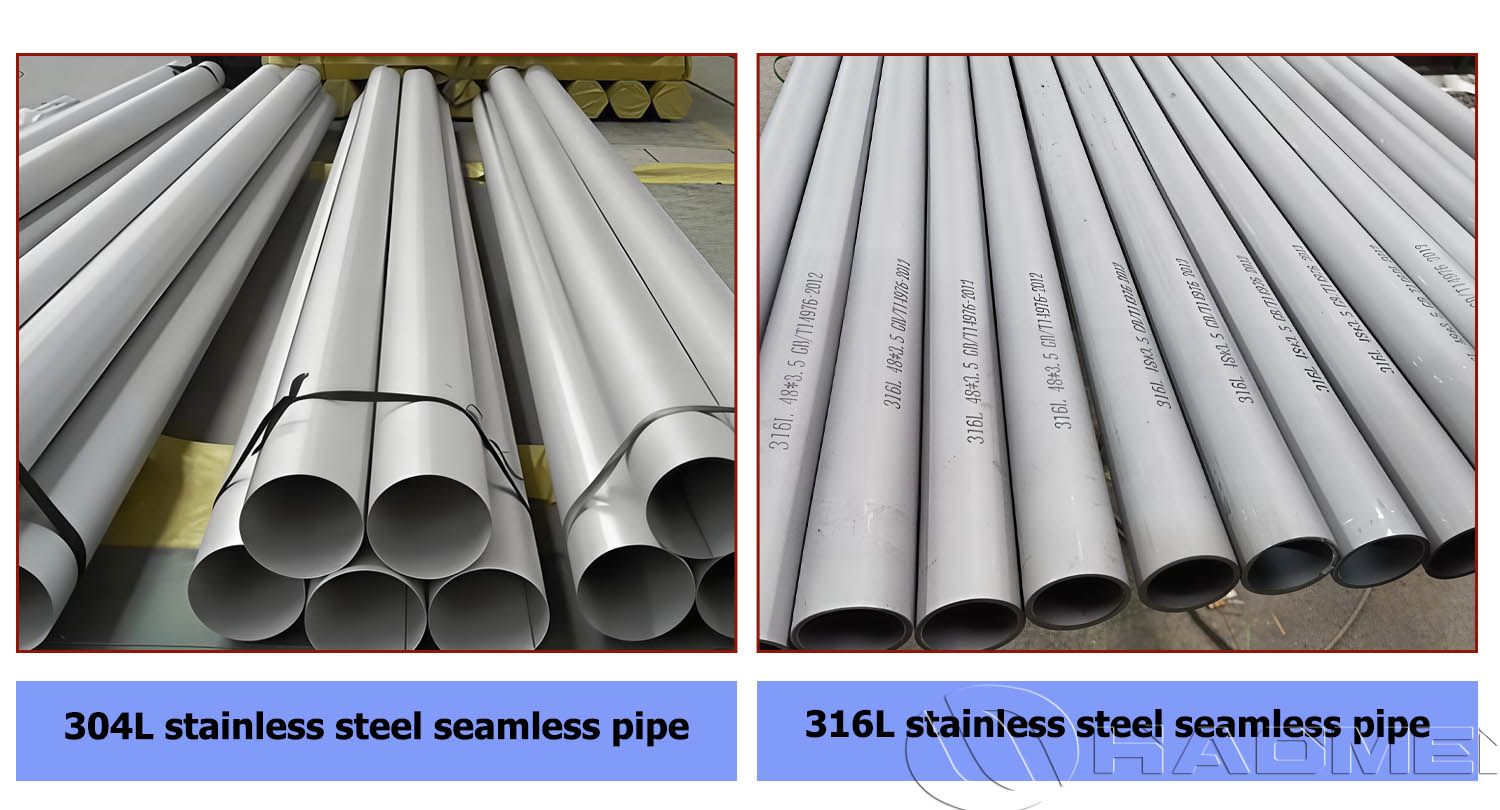
Although both 316L and 304L belong to the austenitic stainless steel family, they differ in chemical composition and corrosion resistance. Shipbuilders should select the appropriate grade according to the transported medium, operating environment, design pressure, and project specifications.
316L is a molybdenum-containing low-carbon austenitic stainless steel, commonly designated as UNS S31603. Due to the addition of molybdenum, its resistance to pitting corrosion and crevice corrosion is generally superior to that of 304L.
Main Performance Features
Excellent corrosion resistance:The addition of molybdenum helps improve resistance to pitting corrosion in chloride-containing environments.
Low carbon content:Reduces the risk of sensitization and intergranular corrosion during welding, supporting corrosion resistance in welded structures.
Good mechanical properties:Offers good strength, ductility, and toughness for a wide range of marine piping systems.
Good weldability:Suitable for welding, fabrication, installation, and maintenance of shipboard piping systems.
Good elevated-temperature performance:Suitable for industrial fluid transportation within a specified temperature range. The actual operating temperature should be determined according to applicable design codes and service conditions.
316L stainless steel seamless pipes are commonly used in ship seawater cooling systems, offshore engineering equipment, marine auxiliary piping, and fluid transportation systems exposed to moderately corrosive media.
It should be noted that 316L is not completely immune to seawater corrosion. For long-term exposure to flowing or stagnant seawater, deposits, or crevice conditions, material selection should still be evaluated according to the actual design environment.
304L is a low-carbon chromium-nickel austenitic stainless steel, commonly designated as UNS S30403. It provides good atmospheric corrosion resistance, formability, and weldability, making it a widely used material in marine and industrial piping systems.
Main Performance Features
Good corrosion resistance:Resistant to many common industrial media and atmospheric environments.
Excellent weldability:Its low-carbon composition helps reduce the risk of intergranular corrosion in the heat-affected zone after welding.
Good fabrication performance:Suitable for cutting, bending, expanding, and other pipe processing operations.
Stable mechanical properties:Provides good ductility, toughness, and overall strength.
Cost-effective solution:When service conditions permit, 304L generally offers a more competitive material cost than 316L.
304L stainless steel seamless pipes are mainly used in shipboard freshwater systems, general industrial fluid pipelines, selected auxiliary piping systems, and working environments with relatively low corrosion levels.
| Property | 316L Stainless Steel | 304L Stainless Steel |
| Main Elements | Fe, Cr, Ni, Mo, low C | Fe, Cr, Ni, low C |
| Molybdenum Content | Typically ≥ 2.0% | No molybdenum addition |
| Corrosion Resistance | Better than 304L, especially in chloride-containing environments | Good general corrosion resistance, but pitting may occur in high-chloride environments |
| Mechanical Strength | Comparable to 304L, often slightly higher depending on condition | Standard stainless steel strength level |
| Typical Service Temperature Range | Approx. -270°C to +800°C* | Approx. -270°C to +800°C* |
| Density | Approx. 8.0 g/cm³ | Approx. 8.0 g/cm³ |
*Actual allowable service temperature depends on pressure, medium, corrosion conditions, design codes, and project specifications.
High-quality marine stainless steel seamless pipes require strict raw material control and a comprehensive manufacturing and inspection process. Common production methods include hot rolling, cold drawing, and cold rolling.
1. Hot-Rolled Seamless Pipe
Hot-rolled stainless steel seamless pipes are generally suitable for larger diameters and heavier wall thicknesses. The production process typically includes billet inspection, heating, piercing, tube rolling, sizing, solution annealing, pickling, straightening, and final inspection.
Hot-rolled seamless pipes offer high production efficiency and a broad size range. They are commonly used for ship main pipelines, structural applications, and medium-to-large diameter fluid transport systems.
2. Cold-Drawn Seamless Pipe
Cold drawing can further improve dimensional accuracy and surface quality, making it especially suitable for small-diameter, thin-wall, and high-precision stainless steel seamless pipes.
Cold-drawn pipes are commonly used for:
Instrument tubing
Hydraulic tubing
High-precision fluid lines
Marine control system piping
Heat exchanger and precision equipment tubing
3. Solution Annealing, Pickling, and Passivation
For 304L and 316L stainless steel seamless pipes, solution annealing, pickling, and passivation are important processes for ensuring corrosion resistance.
Solution annealing helps optimize the metallurgical structure and improve corrosion resistance and toughness. Pickling removes oxide scale, welding oxides, and surface contaminants. Passivation helps restore and enhance the protective passive film on the stainless steel surface.
For marine piping exposed to seawater, salt spray, or highly corrosive environments, surface treatment quality directly affects long-term service life.
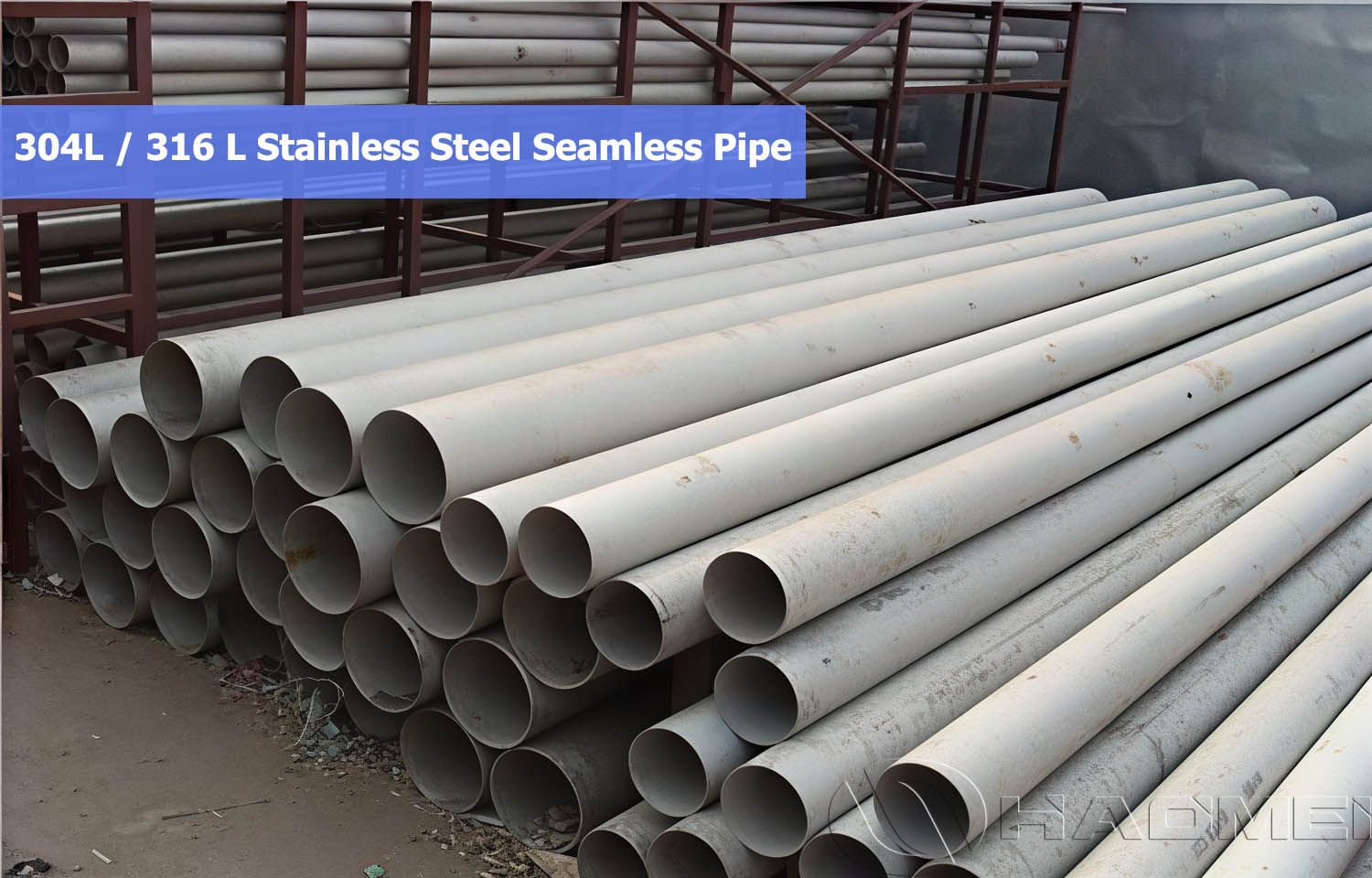
1. No Longitudinal Weld Seam, Lower Leakage Risk
Seamless pipes are formed without a longitudinal weld seam, avoiding structural differences associated with welds and heat-affected zones. Under pressure, vibration, and complex operating conditions, seamless pipes offer higher reliability and can help reduce potential leakage risks in marine piping systems.
2. Corrosion Resistance for Marine Environments
316L contains molybdenum and provides improved resistance to pitting and crevice corrosion. 304L is suitable for less corrosive service environments. Proper material selection can extend service life and reduce maintenance and replacement costs.
3. Good Weldability and Easier Installation
Both 316L and 304L are suitable for cutting, bending, beveling, and welding in ship piping applications. During installation, matching welding consumables should be selected according to the base material grade, wall thickness, and qualified welding procedure. Proper post-weld cleaning and surface treatment are also recommended.
4. BV Inspection and Quality Documentation for Reliable Procurement
BV-approved projects may require inspection and document review according to the applicable certification route. Quality documentation may include:
Material Test Certificate (MTC)
Chemical composition analysis
Mechanical property test reports
Dimensional and visual inspection records
Non-destructive testing reports, where applicable
Heat treatment records and heat/batch traceability
BV inspection certificates or approval documents, where required by the project
Ship piping systems often require different pipe diameters and wall thicknesses depending on design pressure, fluid flow rate, installation space, and connection method.
The following specifications are for reference only. Actual dimensions and technical requirements can be customized according to customer drawings and project specifications.
| Item | Technical Specification |
| Product Name | Marine Stainless Steel Seamless Pipe |
| Material Grade | 316L / 304L |
| UNS Grade | S31603 / S30403 |
| Standards | ASTM A312 / ASME SA312, as required by order |
| Manufacturing Process | Hot rolled / Cold drawn / Cold rolled |
| Outside Diameter | 6–323.9 mm |
| Wall Thickness | 0.5–20 mm |
| Length | 5.8 m / 6 m / Cut length |
| Surface Finish | Pickled, bright annealed, solution annealed, etc. |
| Delivery Condition | Solution annealed, pickled and passivated, cold drawn, hot rolled, etc. |
| Inspection Requirements | Chemical composition, mechanical properties, dimensions, and applicable NDT |
| Certification Requirements | DNV, LR, BV, ABS, CCS, and other classification society certifications as required |
With the inherent advantages of having no weld seam and good pressure-bearing capability, BV 316L/304L stainless steel seamless pipes serve as critical "vessels" in marine piping systems.
Typical applications include:
Hull structure: Serves as structural components, such as support beams and deck supports to ensure the strength and stability of the hull.
Hydraulic and braking systems: Transport media such as hydraulic fluid and brake fluid; require high corrosion resistance and pressure-bearing capacity.
Refrigeration and air conditioning systems: Transport refrigerants and prevent internal corrosion within the systems.
Drainage and wastewater systems: Handle the flow of fluids such as seawater and rainwater.
 01
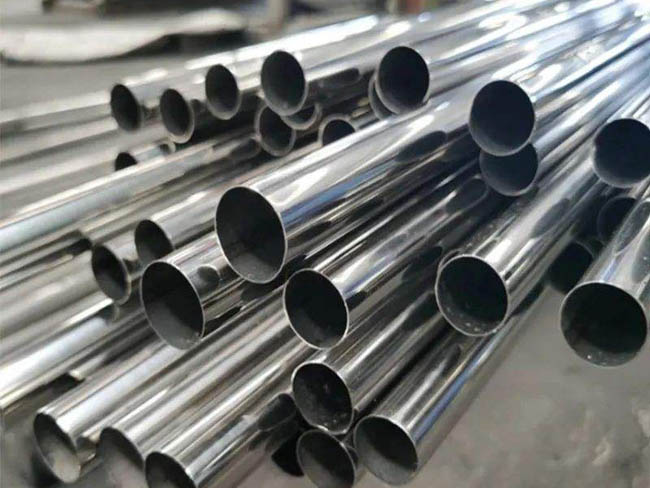
TP304 stainless steel seamless pipe (ASTM A312/A213 TP304) is one of the most widely used austenitic stainless steel pipes in industrial applications. With its excellent corrosion resistance, outstanding workability, and stable performance in both high an
 02
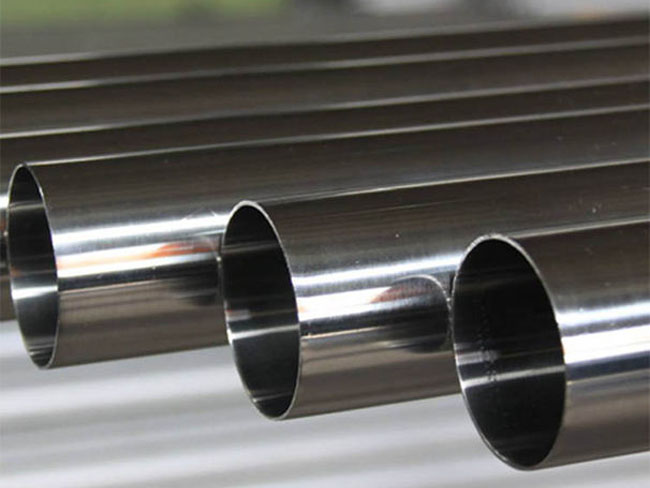
TP316L seamless stainless steel pipe conforms to ASTM A312, A213 and A269 standards, and has excellent corrosion resistance and low carbon welding performance, making it suitable for the chemical, shipbuilding, pharmaceutical and food industries.
 03
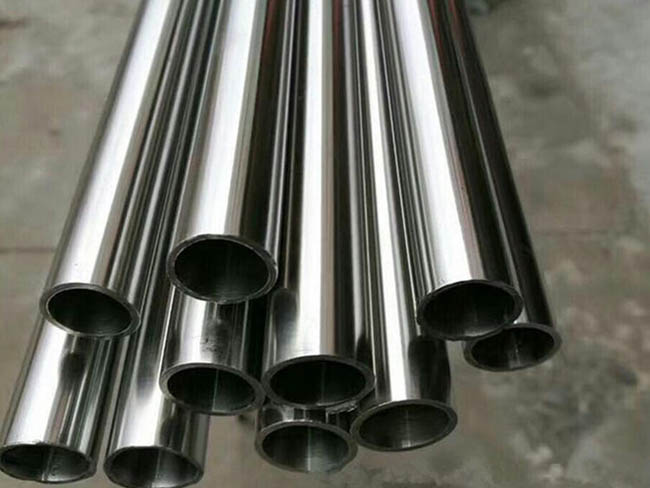
304L stainless steel pipe is produced from the low-carbon version of the widely used austenitic 18-8 stainless steel. The reduced carbon content allows it to be welded without causing localized corrosion. This is because 304L stainless steel produces less
 04
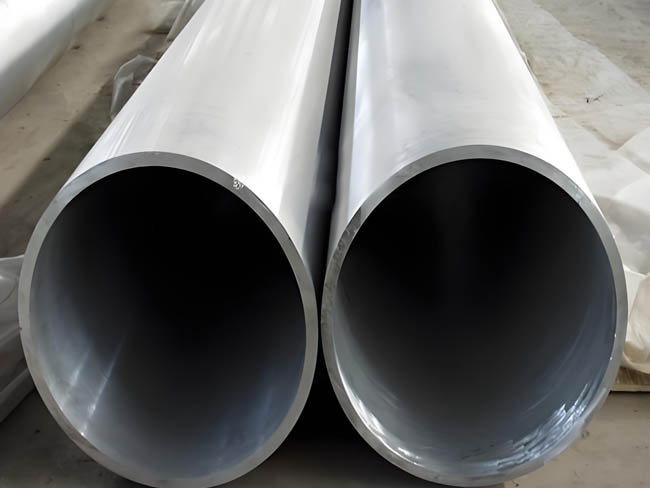
Large diameter seamless steel pipes typically refer to pipes with an outer diameter of 219 mm or larger, and in some cases up to 1020 mm. Compared with standard-size pipes, large-diameter seamless pipes are manufactured using advanced hot rolling or hot e