
-
Email
-
WhatsApp
-
Address
Zhengzhou, China
Zhengzhou, China
 By Hermione
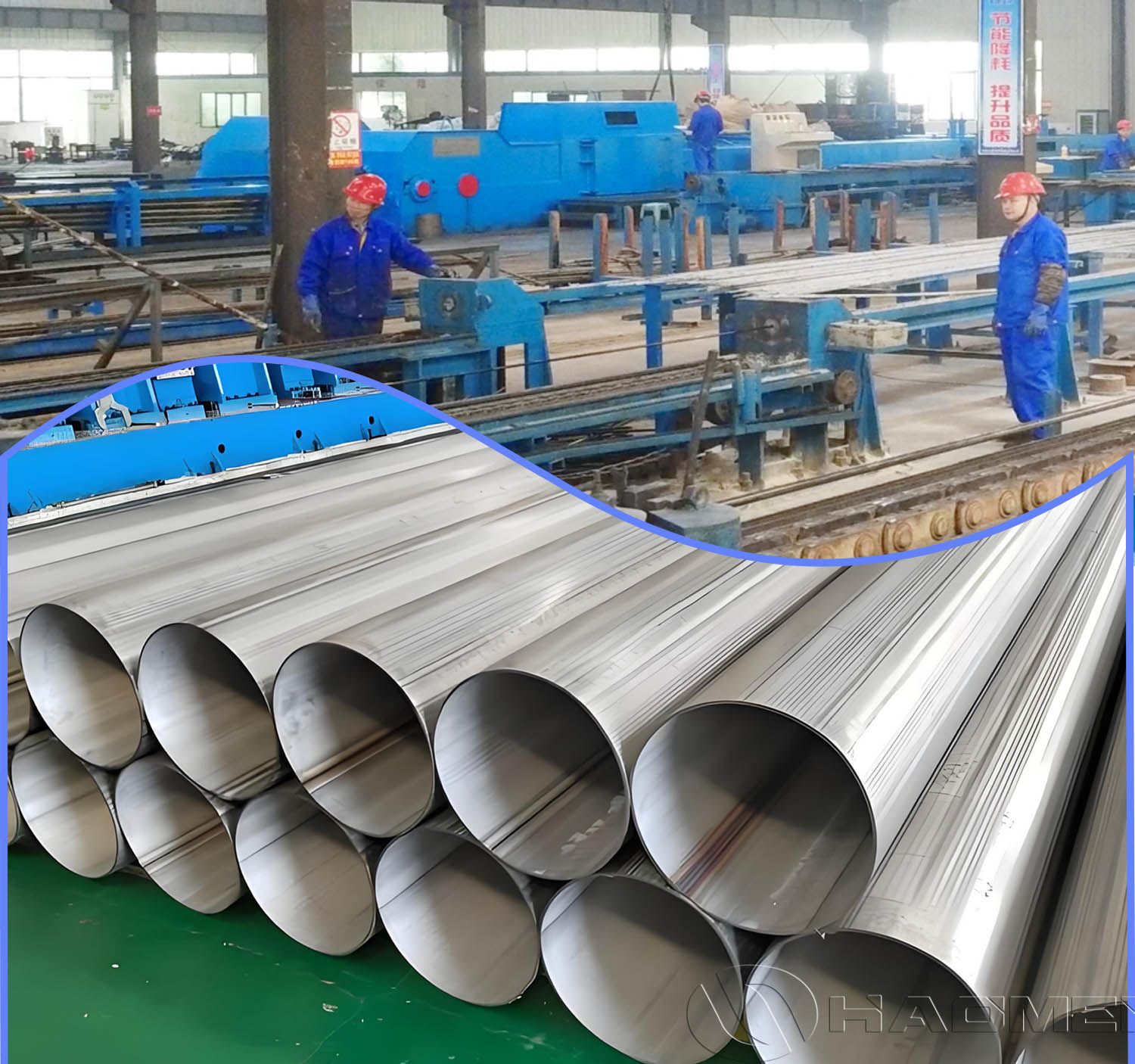
In high-end industrial sectors such as petrochemicals, shipbuilding, power generation, food processing, and pharmaceuticals, stainless steel seamless pipes have become indispensable due to their excellent corrosion resistance, high strength, and reliability. Unlike welded pipes, seamless pipes are manufactured by piercing a solid steel billet and forming it into a hollow tube without any weld seam. This seamless structure provides superior structural integrity and corrosion resistance, making them essential for high-pressure and high-reliability applications.
A stainless steel seamless pipe is produced through processes such as piercing, hot rolling, or cold drawing, resulting in a pipe with no longitudinal weld seam. This structure ensures uniform tensile strength throughout the pipe, allowing it to withstand high pressure more effectively than welded pipes. Compared to welded pipes, seamless pipes offer higher pressure resistance, better structural uniformity, and superior corrosion resistance.
Seamless Structure: Manufactured from solid round billets, eliminating weld-related defects.
High Strength & Pressure Resistance: No weak points, suitable for high and ultra-high pressure applications.
Excellent Corrosion Resistance: Chromium, nickel, and other alloying elements form a passive layer that resists corrosion from water, chemicals, acids, and salts.
Wide Temperature Resistance: Performs well under both high and low temperatures, ideal for boilers and heat exchangers.
High Surface Quality & Precision: Cold-drawn or cold-rolled pipes offer smooth surfaces and tight dimensional tolerances.
Aesthetic & Durable: Bright surface finish with long service life.
Hygienic & Eco-Friendly: No heavy metal leaching, suitable for food, beverage, and pharmaceutical applications.
| Item | Stainless Steel Seamless Pipe | Stainless Steel Welded Pipe |
| Pressure Resistance | High, no stress concentration | Medium, weld seam is a weak point |
| Corrosion Uniformity | Consistent throughout | Weld area differs from base metal |
| Dimensional Accuracy | High (cold-drawn), moderate (hot-rolled) | Generally high, uniform wall thickness |
| Wall Thickness Range | Strong advantage in thick walls | Better for thin-wall cost efficiency |
| Cost | Higher due to complex process | Lower, higher yield |
| Applications | High pressure, high corrosion, heat exchangers | Construction, low-pressure fluids, decoration |
Seamless pipes can be classified based on material, manufacturing process, wall thickness, and diameter. Each type serves different industrial needs.
Category | Type | Characteristics | Typical Applications |
| By Material | Low carbon steel seamless pipe | Good flow efficiency, moderate corrosion resistance | Water, oil, gas pipelines |
| By Material | Medium carbon steel seamless pipe | Higher strength and toughness | Automotive and machinery parts |
| By Material | Low alloy structural steel seamless pipe | Good weldability and load-bearing | Bridges, structures |
| By Material | Alloy steel seamless pipe | High hardness and wear resistance | Heavy machinery, gears |
| By Material | Stainless steel seamless pipe | Excellent corrosion resistance | Food, pharma, chemical |
| By Process | Hot-rolled seamless stainless steel pipe | High precision, smooth surface | Precision engineering |
| By Process | Cold-rolled seamless stainless steel pipe | Thin wall, high accuracy | Hydraulic systems |
| By Wall Thickness | Thick-walled seamless stainless steel pipe | High pressure resistance | Power plants, oil & gas |
| By Wall Thickness | Thin-walled seamless stainless steel pipe | Lightweight, precise | Automotive tubing |
| By Diameter | Small diameter seamless stainless steel pipe | High precision, corrosion resistance | Medical, lab equipment |
| By Diameter | Large diameter seamless stainless steel pipe | High strength, structural integrity | Boilers, petrochemical lines |
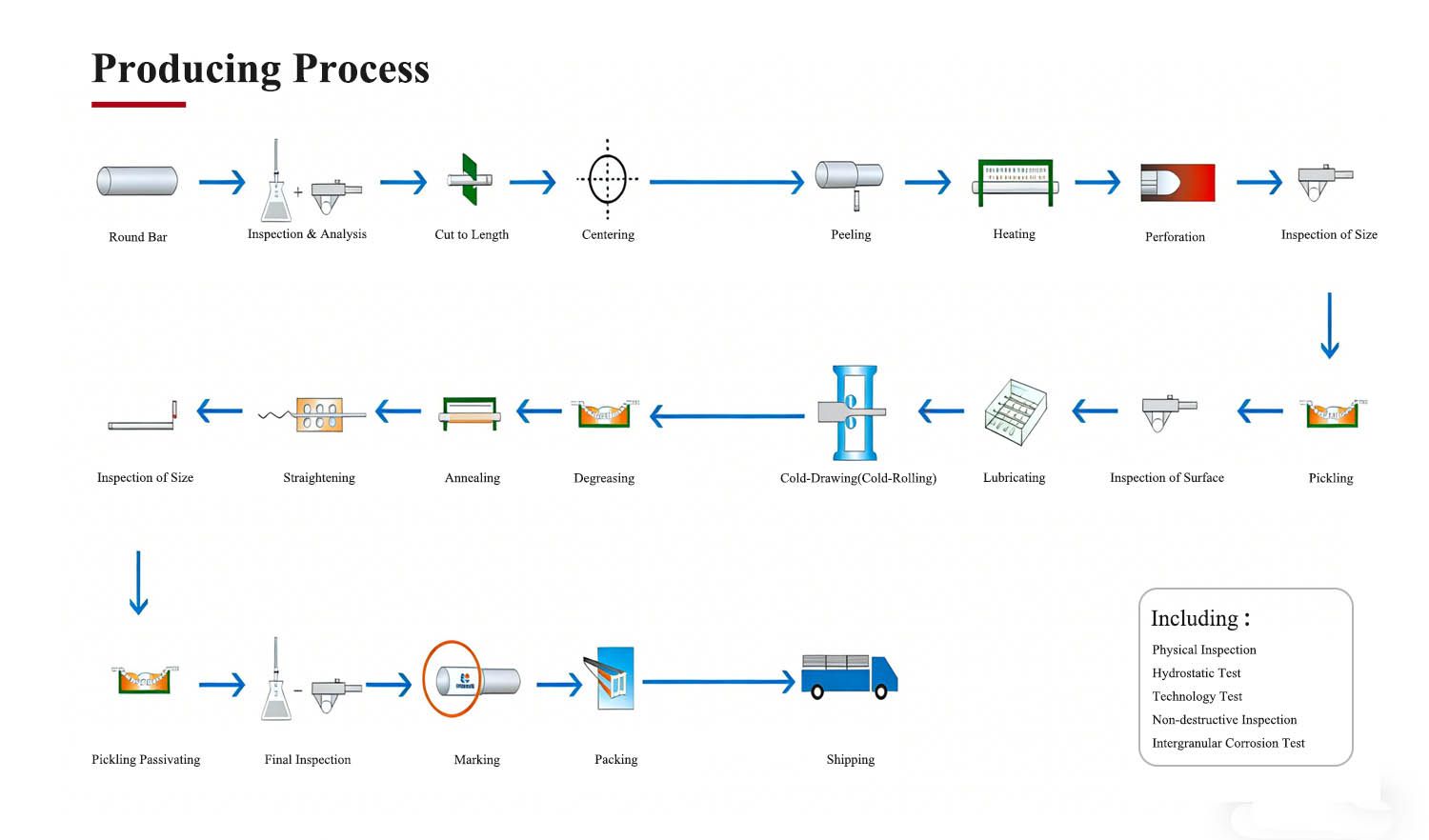
The production process includes several critical steps:
Billet Preparation: High-quality steel ingots or continuous cast billets
Heating: Heated to around 1200°C
Piercing: Solid billet is pierced into hollow tube
Hot Rolling/Extrusion: Forms initial pipe shape
Cold Drawing/Rolling: Improves precision and surface finish
Heat Treatment (Annealing): Restores ductility and corrosion resistance
Straightening & Cutting: Final shaping and sizing
Pickling & Testing: Surface cleaning, passivation, and quality inspection
Hot Rolling: High efficiency, suitable for thick-wall pipes
Cold Rolling/Drawing: Higher precision and better surface quality
Extrusion: Used for special alloys and high-performance requirements
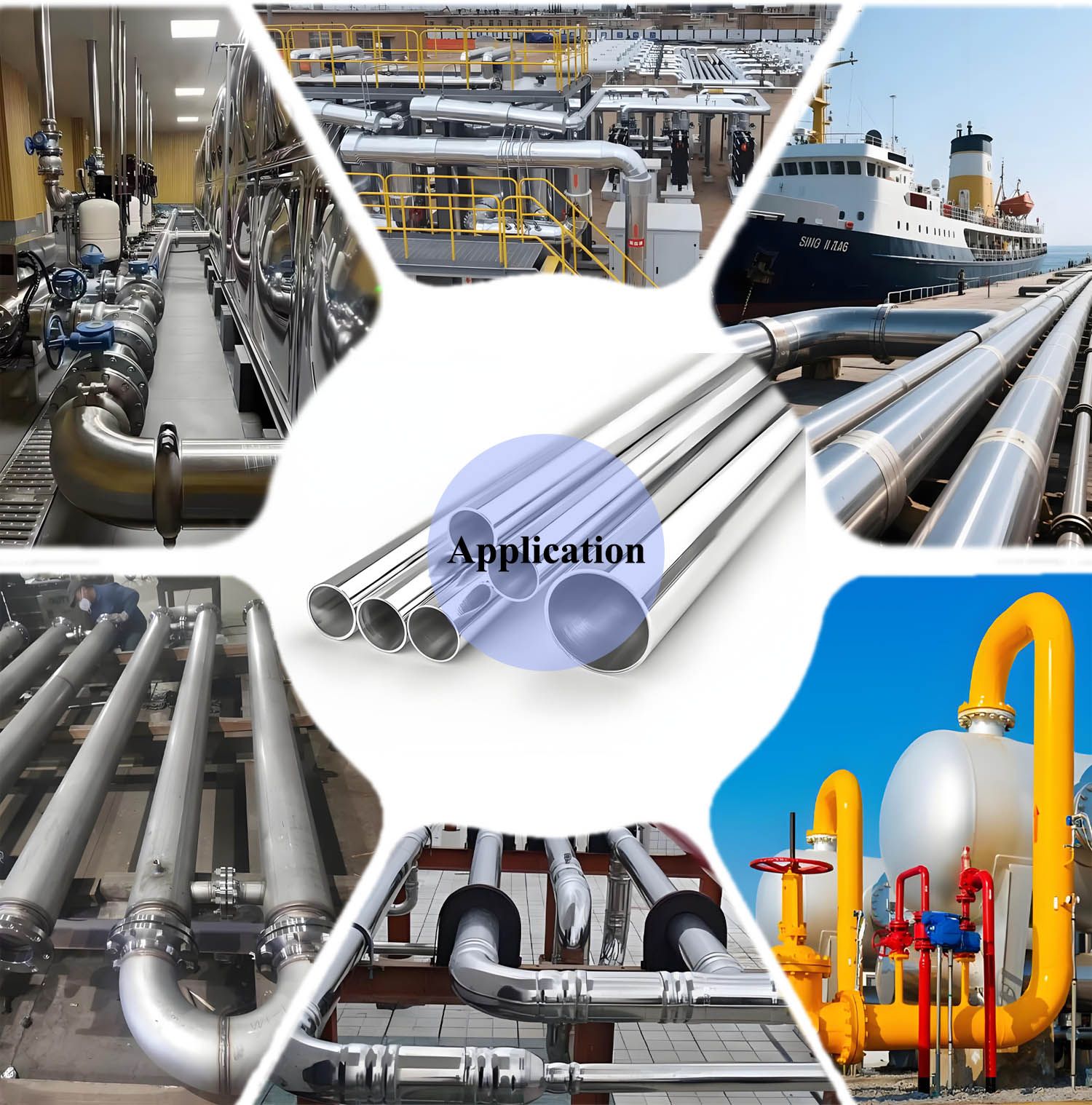
| Industry | Applications | Key Requirements |
| Petrochemical | Oil/gas pipelines, reactors | High pressure, corrosion resistance |
| Power | Boilers, steam pipes | High temperature resistance |
| Food & Pharma | Sanitary pipelines | Hygienic, corrosion resistant |
| Automotive | Exhaust, fuel lines | Heat and vibration resistance |
| Construction | Ventilation, plumbing | Durability, aesthetics |
| Medical | Surgical and fluid systems | Sterility |
| Aerospace | Fuel and gas systems | Lightweight, high strength |
Selecting the right pipe requires balancing performance, material properties, and cost.
First, evaluate the operating conditions, including the type of medium, pressure, and temperature. Carbon steel is suitable for moderate conditions, while stainless or alloy steel is required for corrosive or high-temperature environments.
Second, choose the appropriate material. Carbon steel is economical, alloy steel offers higher strength, and stainless steel provides the best corrosion resistance and hygiene.
Third, determine wall thickness and manufacturing method. Thick-wall pipes are necessary for high-pressure systems, while cold-drawn pipes are ideal for precision applications.
Fourth, verify dimensions and standards. Ensure compliance with standards such as ASTM or ASME.
Fifth, consider mechanical performance. High tensile strength and ductility are critical in dynamic or vibration-heavy environments.
Finally, balance cost and lifecycle value. Although stainless steel pipes have higher initial costs, their durability and low maintenance often make them more cost-effective in the long run. Carbon steel remains a viable option for non-critical applications.
Q1: What is the difference between seamless and welded pipes?
A: Seamless pipes offer higher strength and pressure resistance, while welded pipes are more cost-effective.
Q2: How to choose between 304 and 316L?
A: For marine or highly corrosive environments, 316L is recommended.
Q3: Can pipes be customized?
A: Yes, most manufacturers support custom sizes and specifications.
Q4: What is the delivery time?
A: Typically 7–15 days for standard sizes; custom orders depend on production schedules.
 01
01
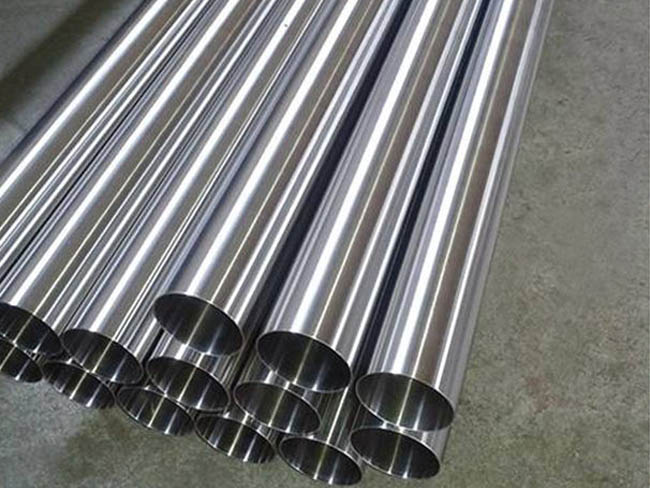
TP304 stainless steel seamless pipe (ASTM A312/A213 TP304) is one of the most widely used austenitic stainless steel pipes in industrial applications. With its excellent corrosion resistance, outstanding workability, and stable performance in both high an
 02
02
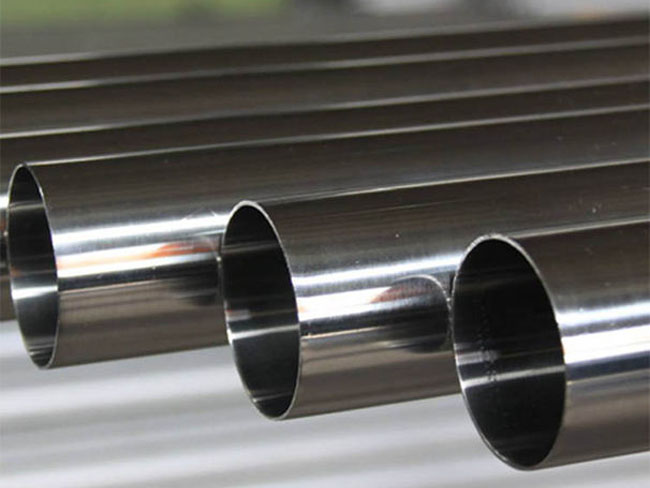
TP316 seamless stainless steel pipe offers excellent corrosion resistance and strength for chemical, marine, food, and petrochemical applications. Manufactured to ASTM A312, A213, and EN 10216-5 standards with customizable sizes and finishes.
 03
03
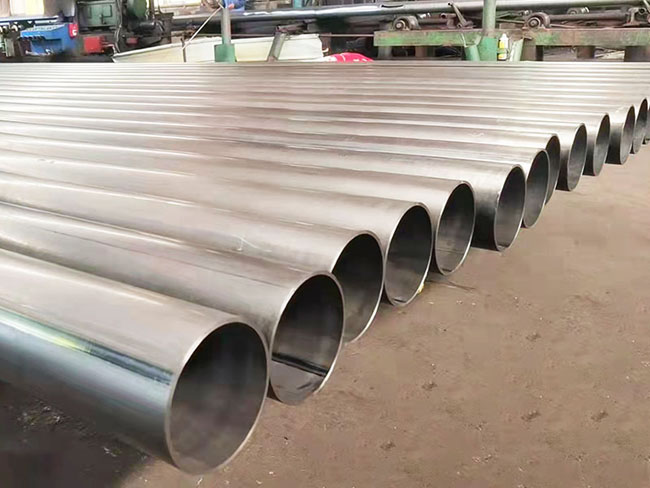
Marine seamless stainless steel pipes are manufactured from austenitic stainless steels such as 304, 304L, 316, and 316L. They feature excellent seawater corrosion resistance and high structural strength, and are widely used in ship piping systems, seawat
 04
04
Austenitic seamless stainless steel pipe refers to seamless steel tubing whose microstructure remains stable austenite at room temperature. These steels typically use chromium and nickel as the primary alloying elements. A typical example is 18Cr-8Ni (Gra