
-
Email
-
WhatsApp
-
Address
Zhengzhou, China
Zhengzhou, China
 By Hermione
In shipbuilding, marine equipment, and offshore platform construction, every component used in ships or marine structures must possess excellent corrosion resistance and wear resistance to withstand ultraviolet radiation, high humidity, salt spray, and severe corrosive environments. Therefore, the performance requirements for materials are extremely strict.
Seamless stainless steel pipes, with their excellent corrosion resistance, high mechanical strength, and reliable safety performance, are widely used in ship railings, ladder brackets, exhaust systems, and various piping systems.
This article provides a comprehensive overview of marine seamless stainless steel pipes, including product introduction, manufacturing processes, performance advantages, marine applications, maintenance tips, and frequently asked questions.
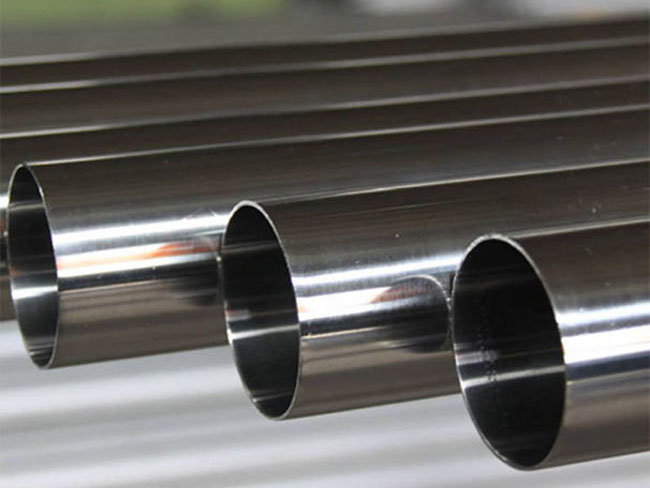
Marine seamless stainless steel pipe refers to a long steel pipe made of stainless steel with no welded seam around the entire circumference. Compared with welded steel pipes, the seamless structure eliminates the weld seam, which is often a potential weak point.
Because of this, seamless pipes have natural advantages in pressure resistance and fatigue strength, making them widely used in various pressurized piping systems on ships.
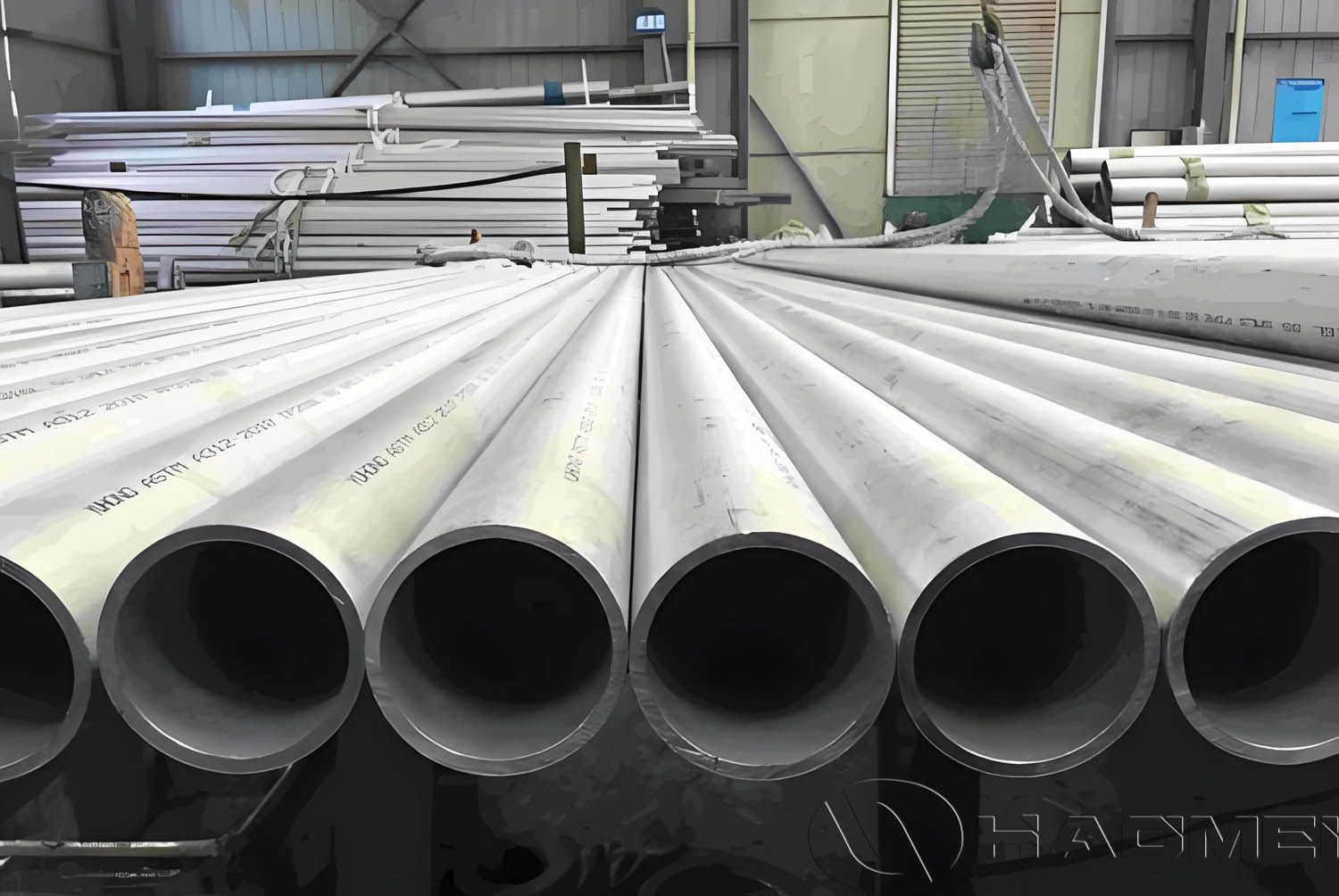
In marine environments, the most commonly used materials include:
TP316 / 316L
Known as the "gold standard" in marine engineering. Due to the addition of molybdenum (Mo), it has excellent resistance to pitting and crevice corrosion.
TP304 / 304L
Often used in freshwater systems or internal pipelines that are not directly exposed to seawater.
Duplex Stainless Steel (such as S32205 / S31803)
Combines the advantages of austenitic and ferritic structures. It offers higher strength and superior resistance to chloride stress corrosion cracking, making it suitable for deep-sea high-pressure environments.
The common range for outer diameters is 6 mm to 1020 mm, with wall thicknesses varying from 0.5 mm to 60 mm, and lengths typically ranging from 1 meter to 30 meters. For precision applications, outer diameters can be as small as 2 mm and wall thicknesses as thin as 0.5 mm, with a maximum length reaching up to 35 meters.
In ship piping system design, pressure rating is a critical parameter when selecting pipe materials. The pressure rating depends on pipe material, outer diameter, wall thickness, and operating temperature.
Common Pressure Rating Classes
According to different wall thickness schedules, marine seamless stainless steel pipes usually include:
| Pipe Schedule | Typical Pressure Application |
| SCH10 | Low pressure pipelines |
| SCH20 | Low to medium pressure systems |
| SCH40 | Medium pressure systems |
| SCH80 | Medium to high pressure systems |
| SCH160 | High pressure systems |
To enter the marine industry, pipes must meet classification society certification requirements.
Manufacturing Standards
ASTM A312 (Seamless Austenitic Stainless Steel Pipes)
ASTM A213 (Boiler and Heat Exchanger Tubes)
ASTM A269
GB/T 14976
EN 10216-5
Classification Society Certifications
Common marine certifications include:
CCS – China Classification Society
DNV – Det Norske Veritas
ABS – American Bureau of Shipping
LR – Lloyd's Register
BV – Bureau Veritas
The production of marine seamless stainless steel pipes mainly involves hot rolling (extrusion) and cold drawing (cold rolling) processes to ensure excellent mechanical properties and structural integrity.
Main Production Process
(1) Raw Material Preparation
High-quality stainless steel round billets are selected and undergo strict chemical composition inspection.
(2) Piercing
A piercing mill is used to convert the solid billet into a hollow tube shell.
(3) Hot Rolling or Cold Rolling
Depending on the required specifications, hot rolling or cold rolling is used to form the pipe.
(4) Cold Drawing Precision Processing
For high-precision pipes, cold drawing is applied to achieve better dimensional accuracy and surface quality.
(5) Heat Treatment
After cold working, solution annealing is performed to improve corrosion resistance and mechanical properties.
(6) Surface Treatment
Common surface finishes include:
Pickled surface
Polished surface
Sandblasted surface
(7) Non-Destructive Testing
Various tests are conducted during production, including:
Ultrasonic Testing (UT)
Eddy Current Testing (ET)
Hydrostatic Pressure Testing
(8) Final Inspection and Packaging
After passing dimensional inspection, chemical composition tests, mechanical property testing, and non-destructive testing, the pipes are packaged and prepared for shipment.
1. Excellent Corrosion Resistance
This is the most critical advantage. Chloride ions in seawater are the main cause of metal corrosion. The 2–3% molybdenum content in 316L stainless steel significantly improves resistance to chloride pitting and crevice corrosion. Therefore, 316L stainless steel is often referred to as "marine grade" stainless steel.
2. Safety and Reliability
The absence of weld seams eliminates potential corrosion-sensitive heat-affected zones and reduces leakage risks caused by weld defects. In high-pressure and vibration-intensive marine environments, seamless pipes offer longer fatigue life and higher safety margins.
3. Excellent Mechanical and Processing Properties
Marine seamless stainless steel pipes have good tensile strength, yield strength, and elongation, along with excellent weldability and bendability, making them suitable for on-site installation and pipe layout in shipyards.
4. Long Service Life and Low Maintenance Cost
Due to superior corrosion resistance, 316L seamless stainless steel pipes can operate for long periods in harsh marine environments, greatly reducing maintenance and replacement costs.
5. Environmental and Hygienic Properties
Stainless steel is non-toxic and does not release harmful substances, making it ideal for ship drinking water systems and wastewater treatment systems.
6. Smooth Inner Surface
Low fluid resistance and minimal scaling help maintain efficient system operation.
7. High Dimensional Accuracy
Cold drawing and cold rolling processes ensure precise outer diameter and wall thickness tolerances, improving sealing performance and reducing leakage risks.
8. High and Low Temperature Resistance
Materials such as 316 / 316L can adapt to high-temperature ship pipelines and provide excellent toughness in low-temperature environments, meeting the requirements of polar vessels.
Marine seamless stainless steel pipes are widely used in various ship systems:
Seawater Cooling Systems
Transport seawater for equipment cooling.
Ship Fuel Systems
Transfer fuel and lubricating oil.
Ballast Water Systems
Used to adjust vessel stability.
Ship Firefighting Systems
Transport fire protection water.
Offshore Platform Pipelines
Used in offshore oil platforms and marine engineering equipment.
Seawater Desalination Systems
Applied in seawater treatment equipment.
Even stainless steel requires proper maintenance in extreme marine environments.
Regular Freshwater Cleaning
Rinse pipelines with freshwater to reduce salt accumulation and prevent pitting corrosion.
Prevent Galvanic Corrosion
During installation, avoid direct contact between stainless steel pipes and carbon steel supports. Use rubber pads or plastic insulation materials for isolation.
Monitor Pitting Corrosion
Regularly inspect elbows and welded connections. If rust spots appear, use professional passivation paste for treatment.
Control Internal Flow Velocity
Avoid excessive flow velocity that may damage the protective passive film on the stainless steel surface.
Proper Welding Process
For marine stainless steel pipes, TIG welding (argon arc welding) is recommended. Argon gas protects the welding area, and post-weld grinding and solution treatment help restore corrosion resistance in the welded area.
Q: What is a seamless stainless steel pipe and how does it differ from a welded pipe?
A: Seamless stainless steel pipes are formed from a solid stainless steel billet through extrusion and drawing without welding. In contrast, welded pipes are produced by rolling steel strips and welding the seam. Seamless pipes generally have higher strength and better corrosion resistance.
Q: Why are 316L seamless stainless steel pipes more suitable for marine environments?
A: 316L contains molybdenum (Mo), which significantly improves resistance to chloride corrosion in seawater environments.
Q: Do marine stainless steel pipes require classification society certification?
A: Yes. Most marine projects require materials to be certified by ABS, DNV, LR, BV, or CCS classification societies.
Q: What is the service life of marine seamless stainless steel pipes?
A: With proper installation and maintenance, the service life can typically reach 20-30 years or even longer.
 01
01
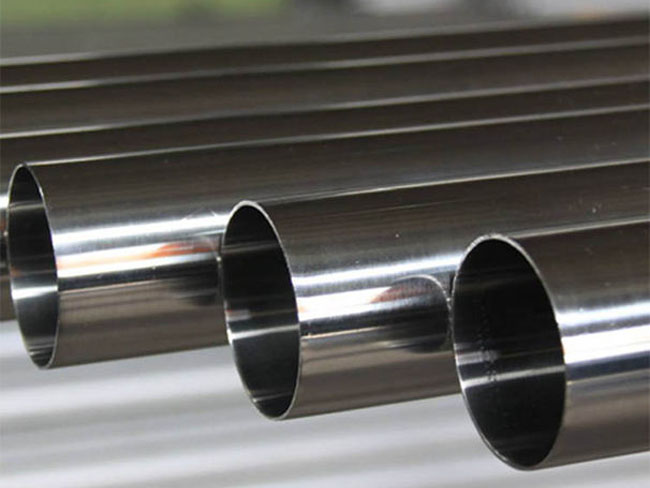
Marine seamless stainless steel pipes are manufactured from austenitic stainless steels such as 304, 304L, 316, and 316L. They feature excellent seawater corrosion resistance and high structural strength, and are widely used in ship piping systems, seawat
 02
02
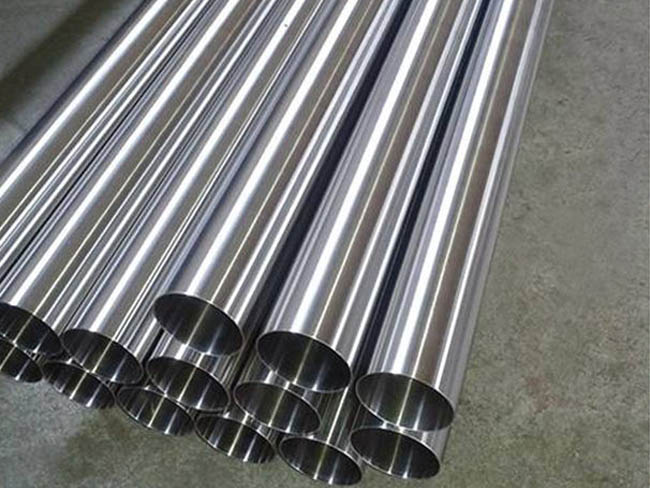
TP316 seamless stainless steel pipe offers excellent corrosion resistance and strength for chemical, marine, food, and petrochemical applications. Manufactured to ASTM A312, A213, and EN 10216-5 standards with customizable sizes and finishes.
 03
03
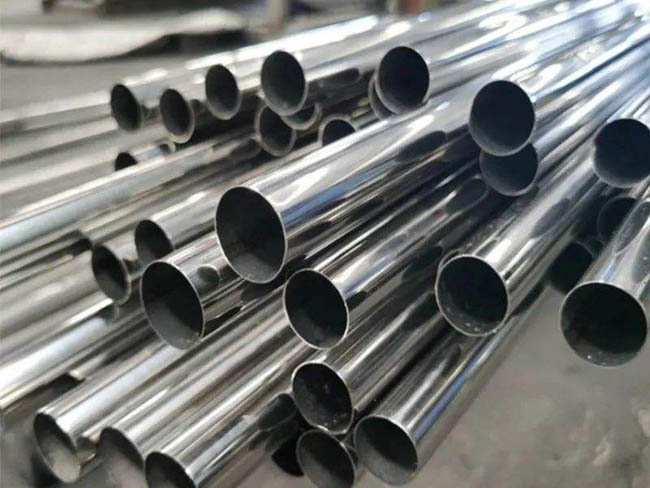
TP304 stainless steel seamless pipe (ASTM A312/A213 TP304) is one of the most widely used austenitic stainless steel pipes in industrial applications. With its excellent corrosion resistance, outstanding workability, and stable performance in both high an
 04
04
Duplex stainless steel pipe consists of approximately equal proportions of ferrite and austenite stainless steel phases. It combines the high strength of ferritic stainless steel with the toughness of austenitic stainless steel. Its yield strength is gene