
-
Email
-
WhatsApp
-
Address
Zhengzhou, China
Zhengzhou, China
 By Hermione
In harsh marine environments with high salinity, high humidity, and strong corrosion, the performance of shipbuilding materials directly affects navigation safety and operating costs. 304 stainless steel seamless pipe, with its excellent corrosion resistance, stable mechanical properties, and good processing adaptability, has become a key material for marine piping systems and structural components. It is widely used in various ships and offshore engineering equipment, making it a reliable and cost-effective material choice.
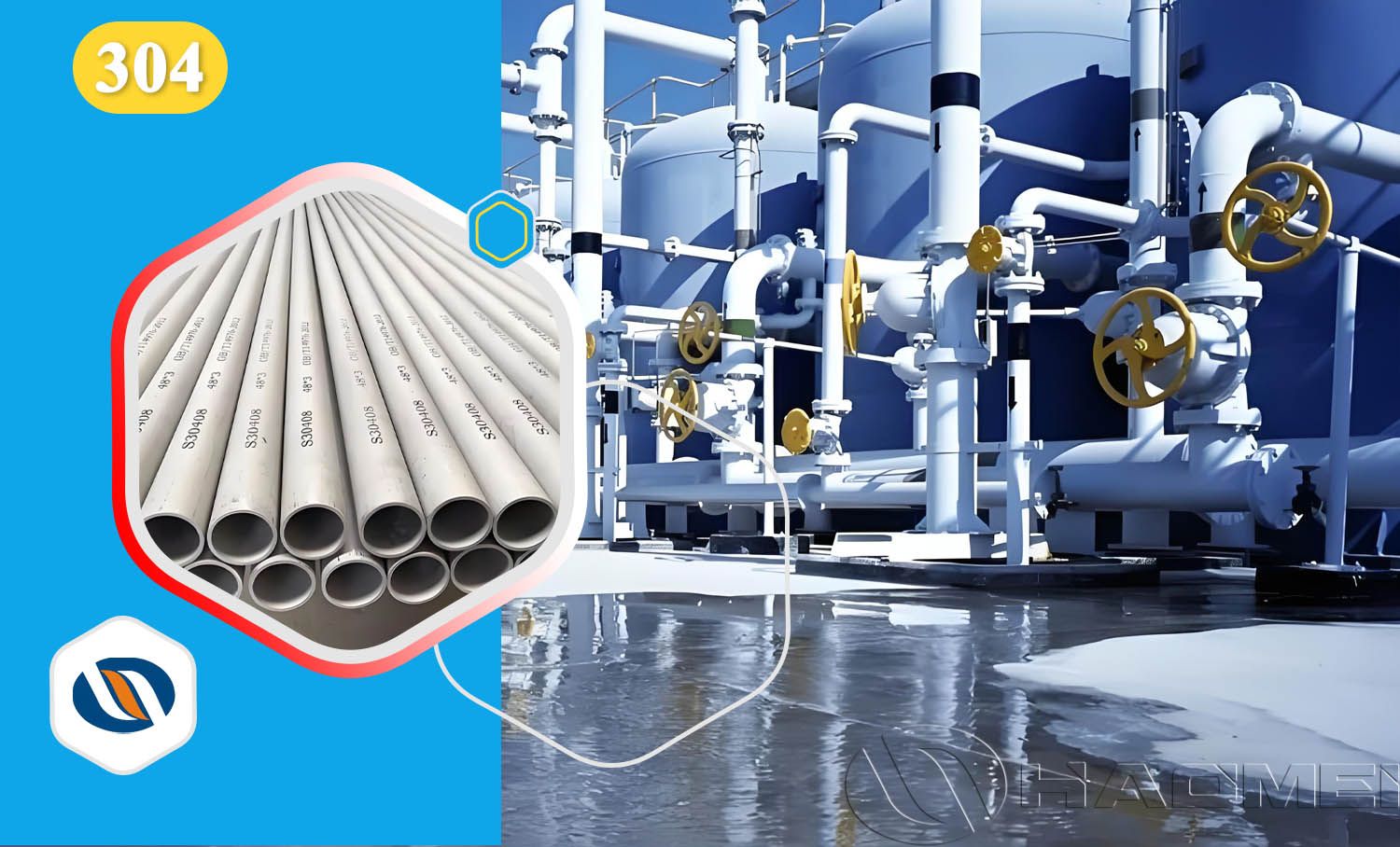
304 stainless steel is an austenitic stainless steel. Its main chemical composition includes approximately 18% chromium and 8% nickel, with carbon content ≤0.08%. It corresponds to standards such as ASTM A312 and SUS304, and is a benchmark grade among general-purpose stainless steels.
In addition to national standards, HAOMEI Aluminum also provides international classification society certifications, including major organizations such as China Classification Society (CCS), American Bureau of Shipping (ABS), and DNV, meeting customers' application requirements.
| C | Mn | Si | P | S | Ni | Cr | Fe |
| ≤0.08% | ≤2.0% | ≤0.75% | ≤0.045% | ≤0.03% | 8.0–10.5% | 18.0–20.0% | Balance |
| The alloying effects of nickel and chromium give the steel excellent corrosion resistance, especially in marine saltwater environments. Its austenitic structure also provides good ductility and weldability. | |||||||
304 stainless steel seamless pipe is produced by an extrusion process. A solid steel billet is heated and then extruded through a die to form a seamless pipe. It is a high-quality stainless steel pipe made without welded seams.
The seamless design provides a smoother inner wall and reduces the surface area where bacteria may grow, making it an ideal choice for industrial applications with high cleanliness requirements. In addition, compared with traditional piping systems, its uniform shape provides better fluid flow performance and higher pressure resistance.
304 stainless steel seamless pipes for ships are mainly used in marine piping systems, liquid conveying systems, steam heat transfer systems, and other fields. They can meet the requirements of different processes and operating environments.
1. Corrosion Resistance
The passive film on 304 stainless steel seamless pipe can effectively isolate corrosive media. Its corrosion rate in a 3.5% sodium chloride solution is only 0.002 mm/a. In marine environments, its service life is 3–5 times longer than that of ordinary carbon steel, greatly reducing maintenance and replacement frequency.
2. Machinability
304 austenitic stainless steel has excellent plasticity and toughness, good cold working performance, and is easy to bend and expand. It is not prone to cracking when processed into complex shapes, greatly facilitating on-site construction in shipyards.
3. Heat and Low-Temperature Resistance
304 stainless steel seamless pipe can maintain stable mechanical properties within a wide temperature range from -196°C to 800°C. Therefore, it is suitable not only for conventional steam heating pipelines, but also has application potential in ultra-low-temperature auxiliary systems related to LNG.
4. Cost-Effectiveness and Availability
Compared with 316L stainless steel pipe, 304 stainless steel is more cost-effective. When operating conditions are met, choosing 304 can effectively control shipbuilding costs. Therefore, it is widely used in applications where resistance to chloride ion corrosion is not extremely demanding.
5. Weldability
304 stainless steel seamless pipe has excellent welding performance. Defect-free welds can be obtained using TIG welding. Combined with eddy current testing technology, the weld leakage rate can be lower than 0.01%, making on-site installation and maintenance easier.
6. Hygiene and Safety
The material is non-toxic and harmless, with no release of harmful substances. Its smooth inner wall is not easy to breed bacteria and fully meets the hygiene standards of marine drinking water and sanitary systems, ensuring water safety for crew members.
| Outer Diameter | 6–630 mm |
| Wall Thickness | 0.5–30 mm |
| Quality Standards | GB/T 14976, ASTM A312, etc. |
| Class I Marine Pipe | Suitable for marine-grade stainless steel pipes used in high-temperature environments above 300°C. Made of steel resistant to high and low temperatures, with good toughness below -10°C. Suitable for stainless steel pipes used in chemical environments. |
| Class II Marine Pipe | Marine-grade stainless steel pipe suitable for general-purpose applications. |
| Class III Marine Pipe | Marine-grade stainless steel pipe not restricted by any special quality specifications. Its welding performance complies with relevant regulations or welding requirements. |
| Tensile Strength (σb) | ≥515 MPa |
| Yield Strength (σ0.2) | ≥205 MPa |
| Elongation (δ) | ≥40% |
| Hardness | ≤200 HB |
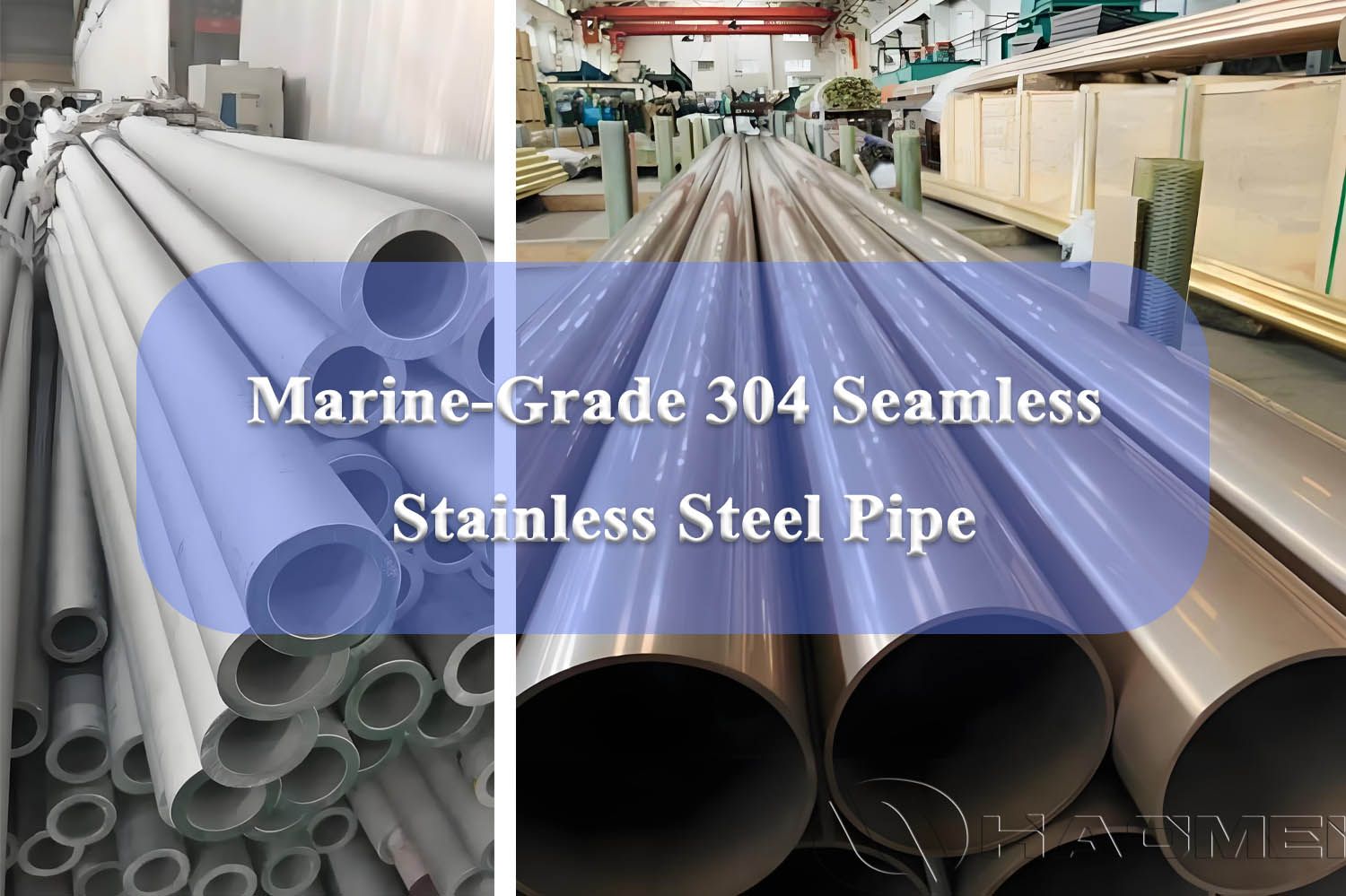
The production process of 304 stainless steel seamless pipe for ships is mainly divided into hot rolling/extrusion and cold drawing/cold rolling. For marine precision pipes, the cold drawing process is widely used due to its high precision and excellent surface quality.
1. Tube Billet Preparation
High-quality 304 round steel is selected, and strict chemical composition reinspection is carried out to ensure that the Ni and Cr contents meet the standards.
2. Piercing
The tube billet is heated to the austenitizing temperature, approximately 1200°C, and then pierced by a piercing mill to form a thick-walled hollow billet.
3. Cold Rolling / Cold Drawing
This is the key step that determines dimensional accuracy. The hollow billet undergoes multiple cold working processes through a series of dies, combined with intermediate annealing and pickling. The wall thickness and outer diameter are gradually reduced, oxide scale is removed, and the pipe dimensional tolerance reaches the advanced precision PC grade.
4. Heat Treatment / Solution Treatment
The steel pipe is heated to around 1050°C and then rapidly cooled. This step is designed to eliminate work hardening, restore corrosion resistance, and remove the tendency toward intergranular corrosion.
5. Straightening and Finishing
This process ensures the straightness and surface finish of the pipe. For high-standard shipbuilding requirements, internal wall polishing may also be performed. The roughness can reach Ra ≤0.8 μm, reducing fluid resistance and preventing media contamination.
6. Non-Destructive Testing
Eddy current testing or hydrostatic testing is carried out to ensure that there are no leakage risks in the pipe wall.
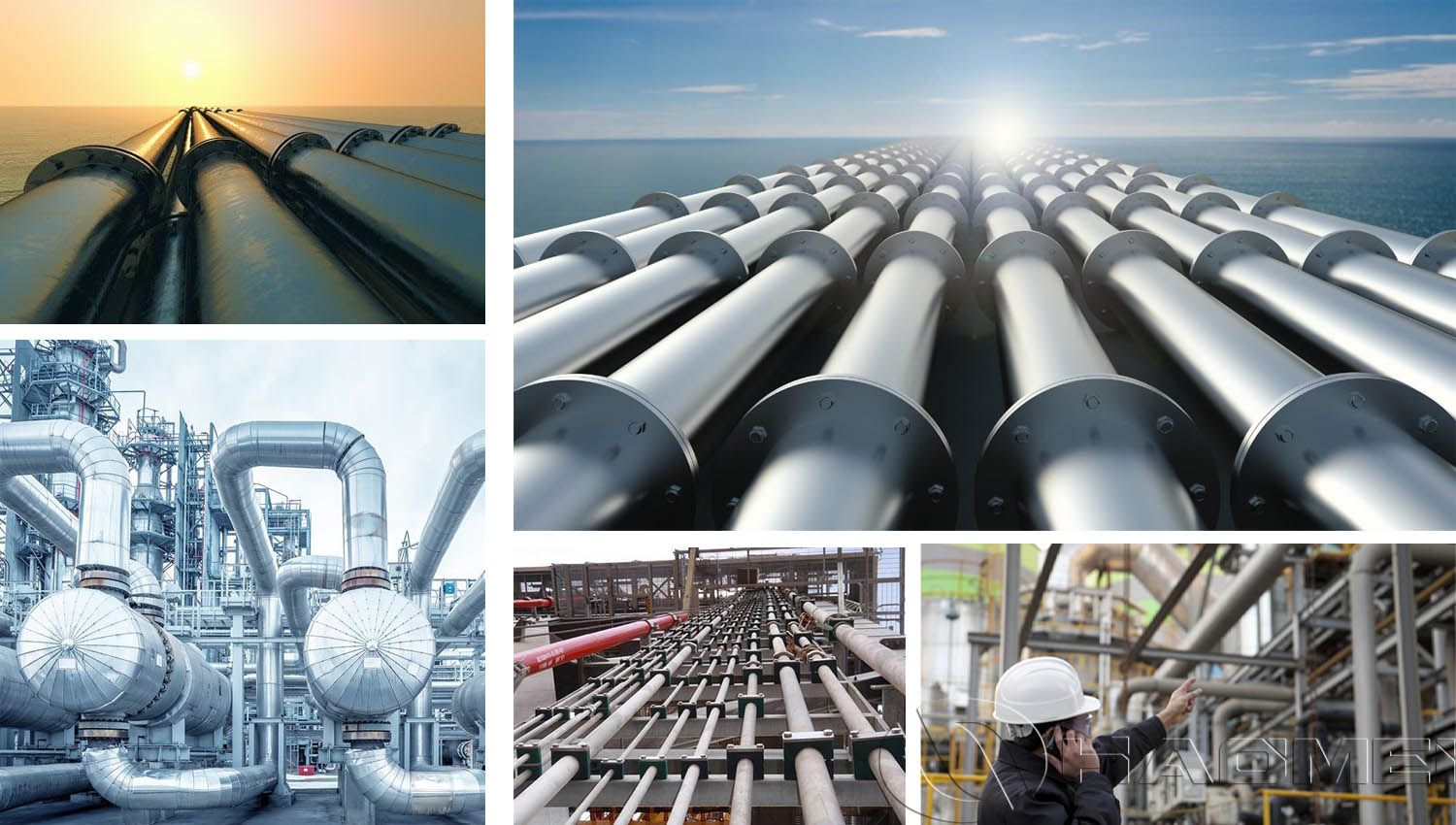
1. Marine Piping Systems
Used for conveying fresh water, fuel oil, lubricating oil, ballast water, and other media. It is a key material in ship fluid systems.
2. Offshore Engineering Equipment
Used in offshore platforms, offshore wind power, and deep-sea equipment for structural connections and fluid transmission.
3. Marine Power Systems
Applied in cooling systems, exhaust systems, and auxiliary equipment pipelines.
4. Cabin Structures and Decoration
Due to its good appearance and corrosion resistance, it is also used in some ship interior structural parts and decorative components.
| Comparison Item | 304 Stainless Steel Seamless Pipe (06Cr19Ni10) | 316L Stainless Steel Seamless Pipe (00Cr17Ni14Mo2) |
| Main Chemical Composition Difference | Contains about 18% chromium (Cr) and 8–11% nickel (Ni). Does not contain molybdenum (Mo). | Contains about 16–18% chromium (Cr), 10–14% nickel (Ni), and specially added 2–3% molybdenum (Mo). |
| Carbon Content (C) | ≤0.08%, ordinary carbon grade | ≤0.03%, "L" stands for low carbon |
| Resistance to Chloride Ions / Seawater | Medium. Suitable for ship interiors away from direct seawater immersion and areas above deck with light salt spray. | Very high. The addition of molybdenum significantly improves resistance to pitting and crevice corrosion, making it more resistant to direct seawater erosion. |
| Resistance to Intergranular Corrosion | General. Chromium sensitization may occur in the welding heat-affected zone at 450°C–850°C, requiring strict post-weld heat treatment. | Excellent. The ultra-low carbon feature greatly reduces carbide precipitation during welding, maintaining excellent intergranular corrosion resistance without post-weld heat treatment. |
| Typical Marine Applications | Engine room ordinary liquid conveying pipes, such as lubricating oil and fuel oil; ship domestic water and sewage pipes; interior structural parts and pipelines in light salt-spray areas. | Pipelines directly exposed to seawater, such as sea chest and ballast water systems; high-salt-spray deck areas, such as tank washing pipelines and fire sprinkler systems; special liquid cargo piping systems for chemical tankers. |
| Material Cost and Economy | Mature technology, relatively low raw material cost, and excellent cost performance. | Due to higher nickel content and the addition of molybdenum, the price is usually 20%–40% higher than 304. |
For 304 stainless steel seamless pipes used in marine applications, proper maintenance is essential to ensure service life and reliability.
1. Routine Inspection
Corrosion Monitoring: Regularly inspect the pipe surface for signs of corrosion.
Seal Inspection: Ensure that all joints and connections are well sealed.
2. Cleaning and Protection
Salt Removal: Clean with fresh water or special cleaning agents.
Anti-Corrosion Coating: Apply anti-corrosion coating in necessary areas.
3. Accident Handling
Leakage Treatment: Immediately shut down the relevant system, cut off the power supply, and seal the leak.
Pipe Section Replacement: Replace damaged pipe sections in time when serious damage is detected.
4. Preventive Measures
Filter Replacement: Regularly replace filters in hydraulic systems and fuel systems.
Pressure Adjustment: Adjust pressure according to system load to avoid overload.
 01
01
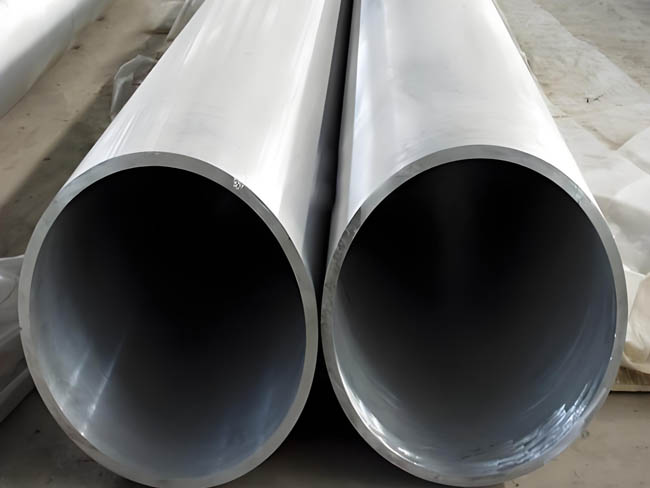
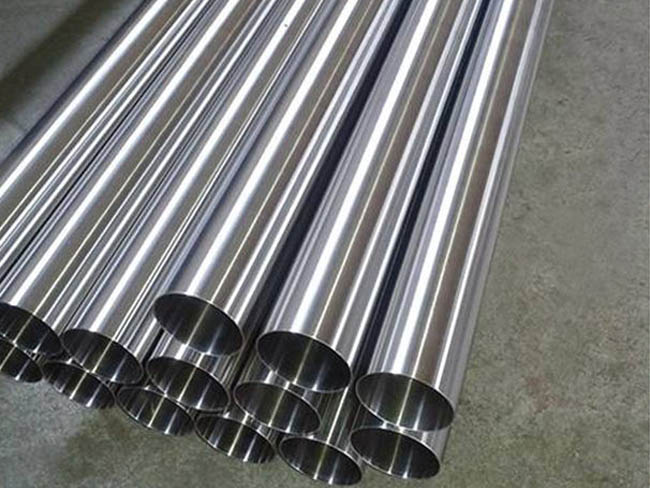
Large diameter seamless steel pipes typically refer to pipes with an outer diameter of 219 mm or larger, and in some cases up to 1020 mm. Compared with standard-size pipes, large-diameter seamless pipes are manufactured using advanced hot rolling or hot e
 02
02
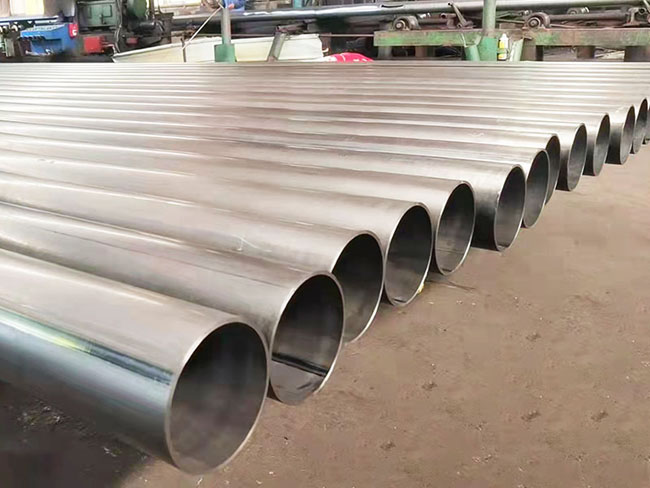
TP316 seamless stainless steel pipe offers excellent corrosion resistance and strength for chemical, marine, food, and petrochemical applications. Manufactured to ASTM A312, A213, and EN 10216-5 standards with customizable sizes and finishes.
 03
03
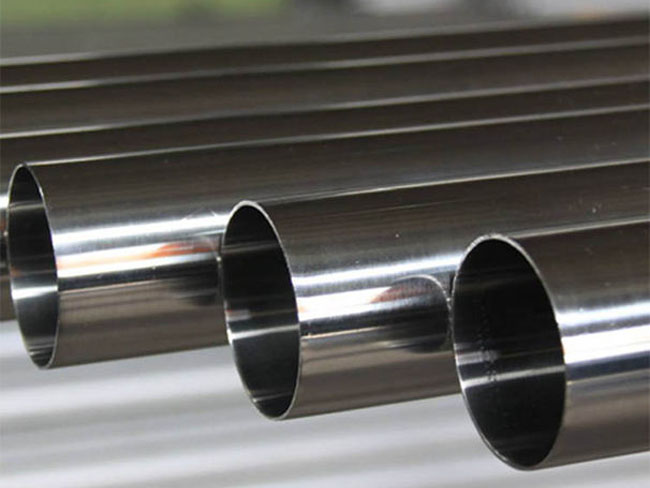
Austenitic seamless stainless steel pipe refers to seamless steel tubing whose microstructure remains stable austenite at room temperature. These steels typically use chromium and nickel as the primary alloying elements. A typical example is 18Cr-8Ni (Gra
 04
04
Marine seamless stainless steel pipes are manufactured from austenitic stainless steels such as 304, 304L, 316, and 316L. They feature excellent seawater corrosion resistance and high structural strength, and are widely used in ship piping systems, seawat