
-
Email
-
WhatsApp
-
Address
Zhengzhou, China
Zhengzhou, China
 By Hermione
Marine piping systems serve as the vital network for transporting oil, gas, fresh water, hydraulic fluid, fire-fighting media, and refrigeration media throughout a vessel. These pipelines are distributed across engine rooms, decks, ballast tanks, and accommodation areas. In complex and ever-changing marine environments, pipe materials must offer exceptionally high reliability and durability. With its excellent performance, seamless stainless steel pipe has become a core choice for marine piping systems.
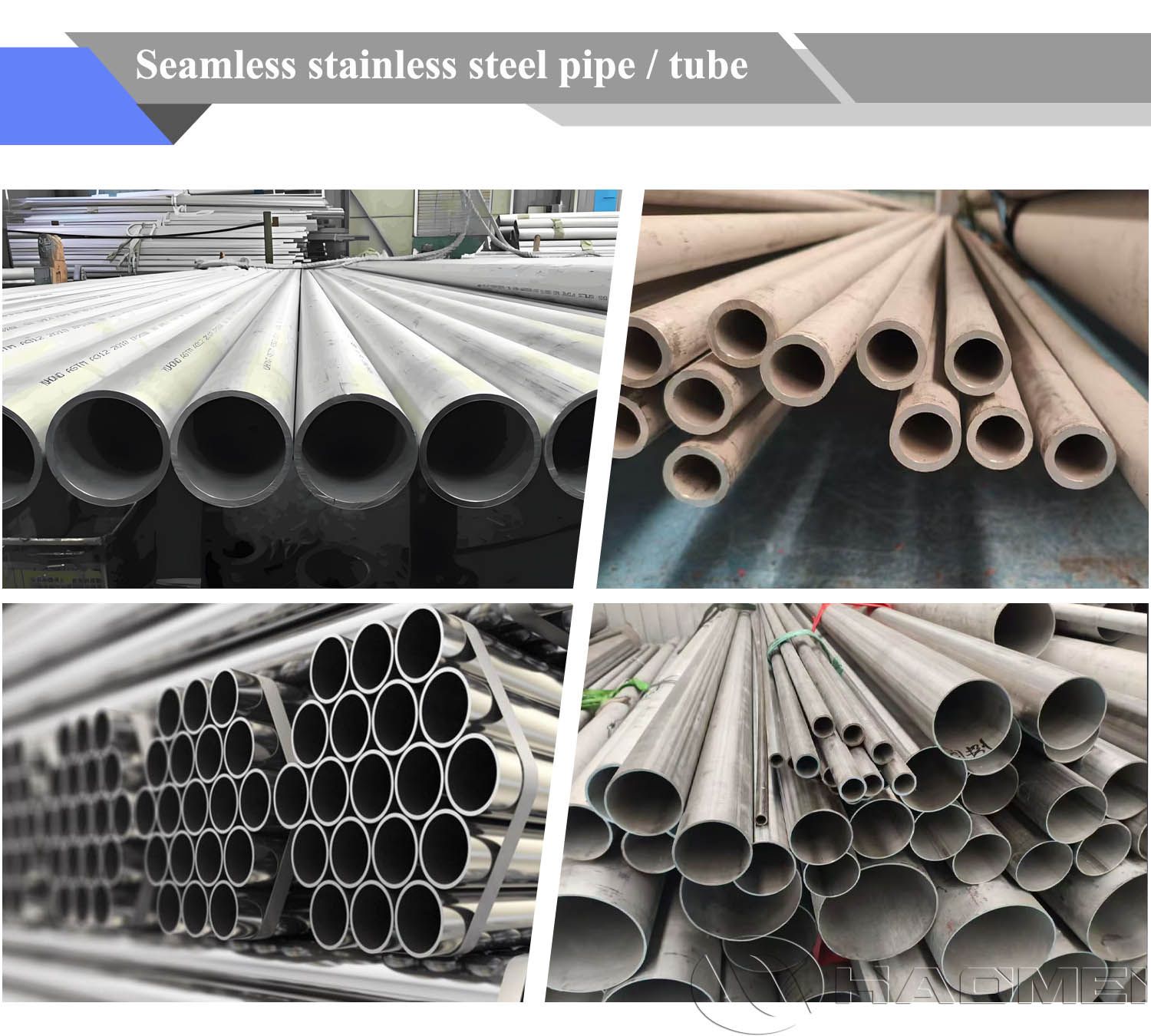
Seamless stainless steel pipe refers to a weld-free steel pipe manufactured from stainless steel round billets through processes such as piercing, cold drawing, cold rolling, heat treatment, pickling and passivation, straightening, and cutting.
Compared with welded stainless steel pipe, seamless stainless steel pipe has a continuous integral pipe body with no risk of weld defects. It offers higher pressure resistance and more stable structural strength, making it suitable for marine piping systems with high requirements for safety, pressure resistance, and sealing performance.
According to the medium characteristics, pressure rating, temperature conditions, and corrosion environment of different systems, various materials can be selected, including 304, 304L, 316, 316L, 321, and 2205 duplex stainless steel.
HAOMEI marine seamless stainless steel pipes are manufactured in strict accordance with international standards such as ASTM A213 / A312 and EN 10216-5. Products can be supplied with factory approvals and product certificates from globally recognized classification societies such as CCS China, ABS USA, LR UK, and DNV Norway, helping your vessels operate worldwide with confidence.
1. Seamless Structure for Higher Safety
Seamless steel pipes are produced through an integral forming process without welded joints. This fundamentally avoids weld cracking or weld corrosion issues and significantly improves system safety.
2. Excellent Corrosion Resistance
Stainless steel forms a dense oxide film on its surface, effectively resisting corrosion from seawater, salt spray, and chemical media. It is especially suitable for marine environments.
3. High Strength and Pressure Resistance
Seamless stainless steel pipes can withstand high-pressure fluid transportation and mechanical loads under complex working conditions, ensuring long-term stable operation.
4. Smooth Inner Wall and Low Fluid Resistance
The smooth inner wall reduces pressure loss during transportation, improves system efficiency, and lowers the risk of scaling.
5. Long Service Life and Low Maintenance Cost
Compared with ordinary carbon steel pipes, stainless steel pipes offer a longer service life, reducing replacement frequency and maintenance costs.
In marine piping systems, commonly used stainless steel grades include:
Suitable for general marine environments, offering good corrosion resistance and processing performance.
Containing molybdenum, 316 / 316L stainless steel provides stronger resistance to seawater corrosion and is widely used in seawater systems and highly corrosive environments.
Duplex stainless steel combines high strength with excellent corrosion resistance, making it suitable for high-end vessels and offshore engineering applications.
Marine seamless stainless steel pipes usually need to comply with relevant national, industry, or international standards. Some shipbuilding projects also require classification society certification.
GB/T 14976 Seamless Stainless Steel Pipes
GB/T 13296 Seamless Stainless Steel Tubes for Boilers and Heat Exchangers
ASTM A312 Seamless and Welded Austenitic Stainless Steel Pipes
ASTM A213 Seamless Stainless Steel Tubes for Boilers, Superheaters, and Heat Exchangers
EN 10216 Seamless Steel Tubes for Pressure Purposes
JIS G3459 Stainless Steel Pipes
CCS China Classification Society
ABS American Bureau of Shipping
DNV Det Norske Veritas
BV Bureau Veritas
LR Lloyd's Register
KR Korean Register
NK Nippon Kaiji Kyokai
In shipbuilding or ship repair projects, corresponding material certificates, inspection reports, and classification society certificates should be provided according to the requirements of the shipowner, shipyard, and design institute.
Marine-grade seamless stainless steel pipes are widely used in marine piping systems, including:
Fuel oil transfer systems
Cooling water systems
Seawater piping systems
Hydraulic systems
Compressed air systems
LNG and chemical carrier systems
In these critical systems, stability and reliability are essential.
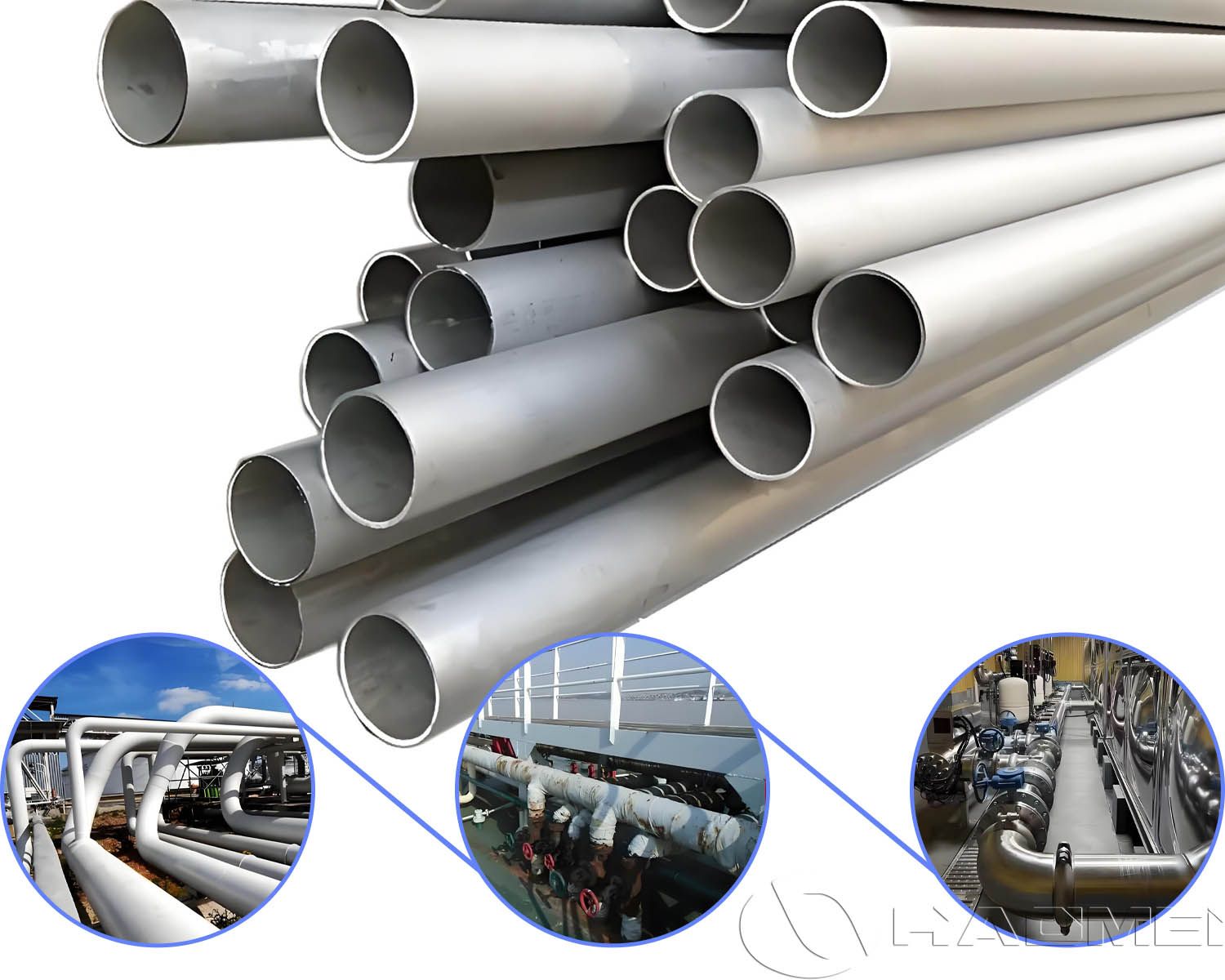
Seamless stainless steel pipes for marine piping systems are available in a wide range of specifications and can be customized according to ship design drawings and system requirements.
Common outer diameters cover small-diameter instrument tubes, medium-diameter conveying pipes, and large-diameter main pipelines, such as:
Small diameters:
6 mm, 8 mm, 10 mm, 12 mm, 14 mm, 16 mm, 18 mm, 20 mm
Medium diameters:
25 mm, 32 mm, 38 mm, 45 mm, 57 mm, 76 mm, 89 mm
Large diameters:
108 mm, 133 mm, 159 mm, 219 mm and above
Wall thickness can be selected according to pressure rating and design requirements, including:
Thin-wall pipes
Medium-thickness pipes
Thick-wall high-pressure pipes
For hydraulic systems, high-pressure fuel systems, or steam systems, the appropriate wall thickness should be selected based on design pressure, temperature, corrosion allowance, and relevant standards.
Common surface treatments for marine seamless stainless steel pipes include:
Pickled white surface
Polished surface
Solution annealed and pickled condition
Internal and external polished condition
Passivated condition
Pickling and passivation can remove surface oxide scale and contaminants, improving the corrosion resistance of stainless steel pipes.
Products can be supplied according to customer requirements, including:
Fixed-length pipes
Random-length pipes
Cut-to-length short pipes
Precision seamless pipes
Thick-wall seamless pipes
Large-diameter seamless pipes
Matching fittings such as elbows, tees, and flanges
Q1: Why are seamless stainless steel pipes preferred for marine piping systems?
A: The seamless structure avoids weld defects and provides higher pressure resistance and safety, making it especially suitable for demanding marine environments.
Q2: What is the difference between 316L and 304 in marine applications?
A: 316L contains molybdenum, which gives it stronger resistance to seawater corrosion. It is more suitable for seawater systems and high-salinity environments.
Q3: Can seamless stainless steel pipes be used in high-pressure systems?
A: Yes. Their high strength and uniform structure make them very suitable for high-pressure fluid transportation systems.
Q4: Is classification society certification required?
A: For critical marine systems, such as fuel oil and cooling systems, classification society certification such as CCS is usually required.
Q5: Can sizes and lengths be customized?
A: Yes. Outer diameter, wall thickness, length, and surface condition can all be customized according to project requirements.
Q6: What is the usual delivery time?
A: Standard specifications usually take 2–4 weeks. Delivery time for customized products depends on the order requirements.
Q7: Can inspection reports be provided?
A: Yes. Material Test Certificates (MTC), non-destructive testing reports, and relevant certification documents can be provided.
 01
01
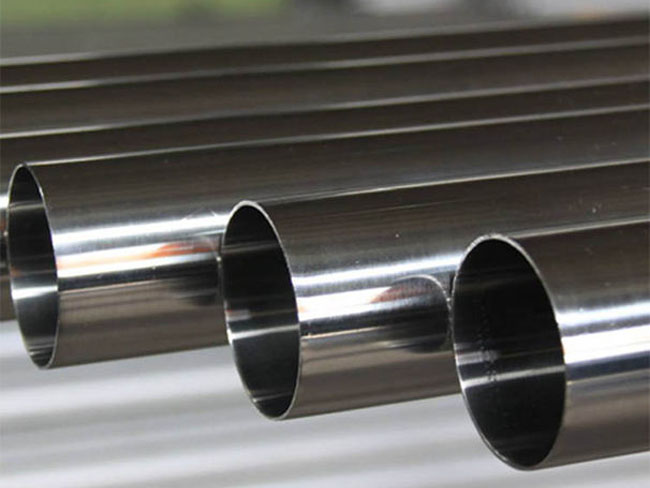
TP316L seamless stainless steel pipe conforms to ASTM A312, A213 and A269 standards, and has excellent corrosion resistance and low carbon welding performance, making it suitable for the chemical, shipbuilding, pharmaceutical and food industries.
 02
02
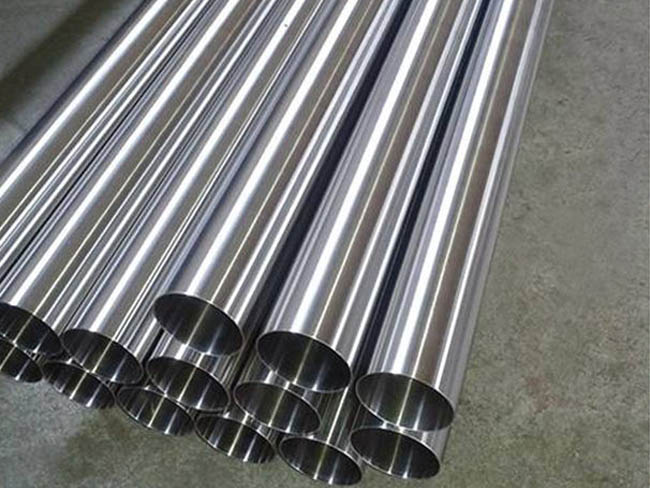
TP316 seamless stainless steel pipe offers excellent corrosion resistance and strength for chemical, marine, food, and petrochemical applications. Manufactured to ASTM A312, A213, and EN 10216-5 standards with customizable sizes and finishes.
 03
03
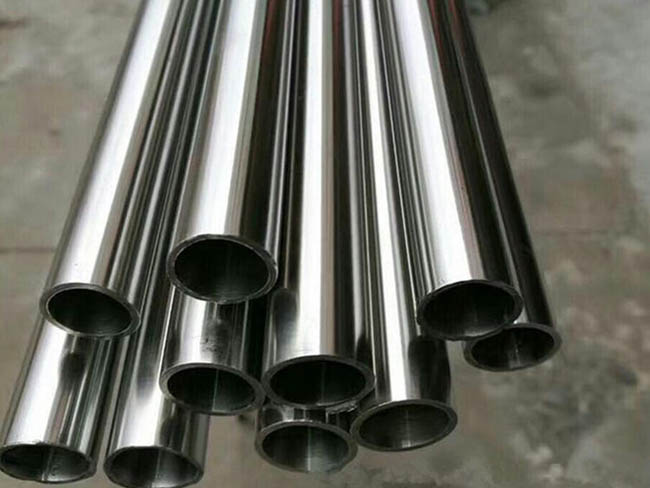
304L stainless steel pipe is produced from the low-carbon version of the widely used austenitic 18-8 stainless steel. The reduced carbon content allows it to be welded without causing localized corrosion. This is because 304L stainless steel produces less
 04
04
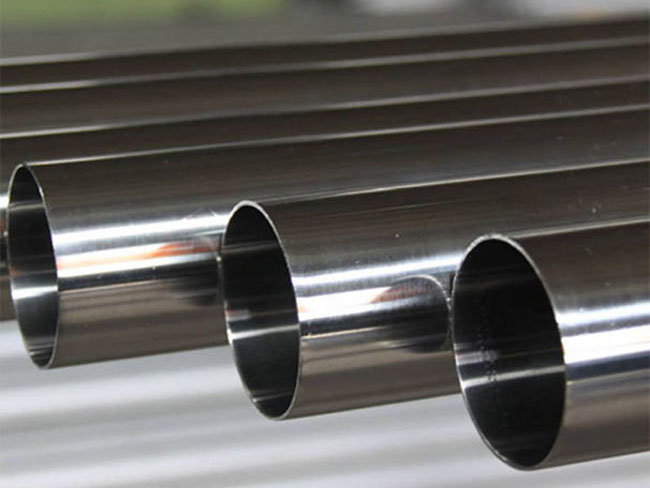
Duplex stainless steel pipe consists of approximately equal proportions of ferrite and austenite stainless steel phases. It combines the high strength of ferritic stainless steel with the toughness of austenitic stainless steel. Its yield strength is gene