
-
Email
-
WhatsApp
-
Address
Zhengzhou, China
Zhengzhou, China
 By Hermione
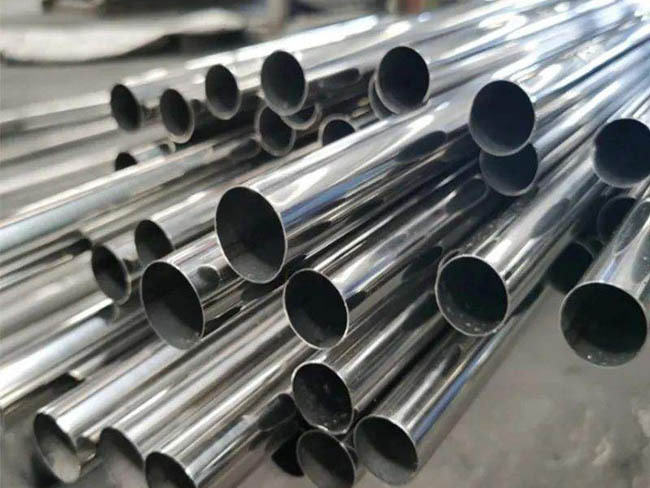
Stainless steel seamless pipe is a hollow seamless section manufactured from TP316/316L dual-grade material in accordance with ASTM A312 / ASME SA312 standards. Its dimensions are determined by nominal pipe size and wall thickness schedule. For a given nominal pipe size, the outside diameter is fixed; the wall thickness schedule determines the pipe wall thickness, while the inside diameter changes accordingly.
Marine-grade stainless steel seamless pipes must comply with the requirements of classification societies in different countries and with national standards for pressure piping system classification. A complete and traceable quality control system is required, covering material selection, manufacturing processes, mechanical properties, corrosion resistance, dimensional accuracy, surface quality, type testing, and final inspection.
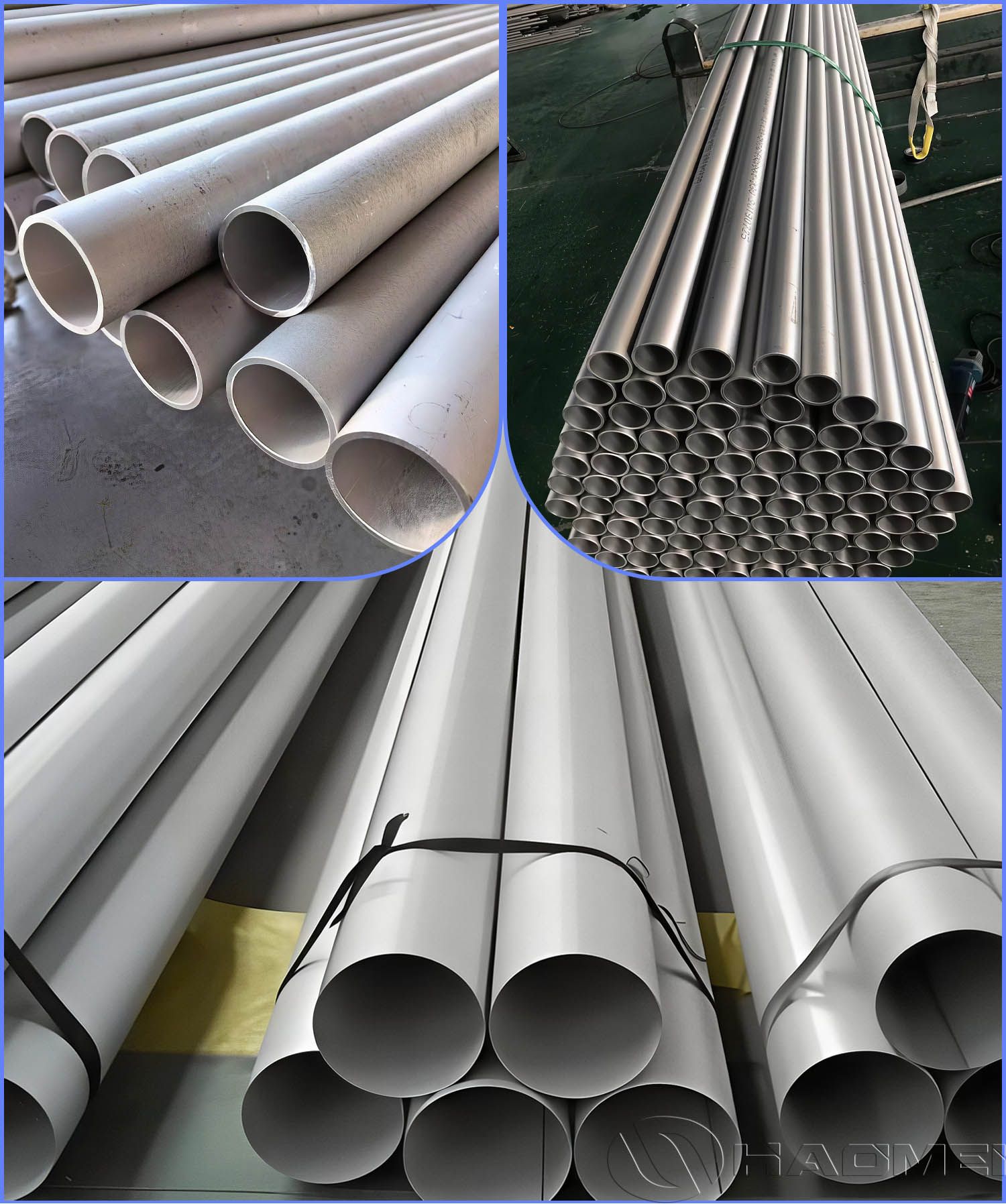
Chloride ions in marine environments are one of the main causes of pipe failure. Therefore, material selection must match the service medium, operating temperature, and pressure conditions. The mainstream materials are generally divided into two main categories: austenitic stainless steel and duplex stainless steel.
Austenitic Stainless Steel
Common grades include 304L, 316L, 321, 347, 316LN, and 317L. These materials are suitable for freshwater systems, ambient-temperature seawater systems, and engine-room cooling pipelines.
Among them, 316L contains molybdenum and provides better resistance to pitting corrosion and crevice corrosion than 304L. It is one of the most commonly used basic grades for marine seawater piping systems. Stabilized grades such as 321 and 347 are suitable for high-temperature applications, helping reduce the risk of intergranular corrosion caused by sensitization.
Duplex Stainless Steel
Common duplex stainless steel grades include 2205 (S32205) and super duplex stainless steel 2507. With a dual-phase microstructure of austenite and ferrite, duplex stainless steels offer much higher yield strength than conventional austenitic stainless steels. They also have a higher Pitting Resistance Equivalent Number, or PREN, and excellent resistance to seawater corrosion.
Duplex stainless steel pipes are widely used in ballast water systems, chemical tanker cargo pipelines, exhaust gas cleaning or scrubber piping systems, and other demanding marine applications. Their higher strength can also help reduce the required wall thickness and save valuable space inside ship compartments.
Chemical Composition Control
Chemical composition should be verified through both heat analysis and finished-product sampling analysis. Harmful elements, especially carbon, sulfur, and phosphorus, must be strictly controlled.
Low-carbon grades with the "L" suffix reduce carbon content and help prevent chromium depletion at grain boundaries after welding. Molybdenum and nitrogen content must also be accurately controlled to ensure that the PREN requirement is met.
For duplex stainless steel, the austenite-to-ferrite phase balance must be controlled to ensure a stable metallographic structure and prevent the formation of brittle phases.
Ships are continuously exposed to engine vibration and alternating loads caused by waves and vessel movement. Therefore, seamless pipes must have stable mechanical properties.
According to applicable standards, each production batch should be sampled for tensile testing, impact testing, flattening testing, and/or bending testing.
Tensile Properties
Tensile testing is used to determine the proof strength at 0.2% offset, tensile strength, and elongation after fracture.
Test specimens may be taken from the beginning and end sections of the steel pipe and in longitudinal and transverse directions as required by the relevant standard. For small-diameter pipes with an outside diameter below 30 mm, full-section pipe tensile specimens may be used where applicable. This helps verify the uniformity of mechanical properties along the full pipe length and avoids potential risks caused by inconsistent properties between the two ends.
Impact Toughness
For low-temperature service conditions, such as piping systems on LNG carriers, low-temperature impact testing may be required to ensure that the pipe will not suffer brittle fracture at the specified operating temperature.
Flattening and Bending Tests
Large-diameter pipes may be subject to 180° forward and reverse bending tests. Small pipes with diameters below 30 mm may be subject to flattening tests. These tests evaluate the ductility and internal metallurgical quality of the pipe, helping prevent cracking during pipe bending, fabrication, and installation.
Marine-grade stainless steel seamless pipes are generally supplied in the condition of solution heat treatment plus pickling and passivation. Solution annealing helps dissolve carbides and obtain a uniform austenitic structure. For pipes heat-treated in a protective atmosphere and finished by full-length boring or polishing, pickling may be omitted by agreement.
Heat treatment records must be complete and traceable. Pipes that fail to meet heat treatment requirements should not be accepted for delivery.
Marine atmospheres and seawater act as natural corrosive media; the corrosion resistance of stainless steel seamless pipes directly determines their service life.
Pitting Resistance Equivalent Number (PREN):
The core formula for evaluating the resistance of stainless steel to pitting corrosion in seawater is PREN = %Cr + 3.3(%Mo) + 16(%N). For typical seawater piping systems, marine-grade stainless steel is generally required to have a PREN value greater than 30 or 35 to effectively resist chloride ion attack.
Intergranular Corrosion Testing:
During production, pipes must undergo rigorous intergranular corrosion testing (such as the Huey test or the sulfuric acid-copper sulfate test). This ensures that no chromium depletion occurs at the grain boundaries following welding or heat treatment, thereby preventing sudden pipeline leaks caused by intergranular corrosion.
Stress Corrosion Cracking (SCC) Protection:
Under the combined influence of tensile stress and specific corrosive media (such as chlorides), conventional stainless steel is susceptible to stress corrosion cracking. Consequently, high-quality marine-grade seamless pipes are engineered with controlled microstructures—such as an optimized phase ratio in duplex stainless steel—to significantly enhance their resistance to SCC.
Given the compact nature of ship compartments, the requirements for dimensional tolerances—covering pipe prefabrication, flange alignment, and the assembly of bent pipes—are significantly more stringent than those for standard industrial piping. Standards are categorized into two precision grades, "PA" (standard) and "PC" (high-precision), with the applicable grade determined by the specific piping system requirements:
(1) Dimensional Tolerances: Parameters such as outer diameter, wall thickness, length, roundness, and straightness are subject to strict control. Uneven wall thickness or excessive ovality can compromise pressure-bearing capacity and impair the fit of sealing surfaces—common causes of leaks during on-site installation.
(2) Surface Quality: Both internal and external surfaces must be free from harmful defects, including cracks, folds, laps, delamination, scabs, or deep scratches. Minor, localized defects may be removed by grinding, provided that the remaining wall thickness does not fall below the minimum design specification. A high degree of smoothness is required for the inner surface to minimize fluid resistance and reduce the risk of sediment accumulation, marine growth attachment, and localized pitting corrosion. Following pickling and passivation, a uniform passive film is formed on the surface, enhancing resistance to seawater corrosion.
The quality of seamless pipes depends not only on the raw materials but also, to a significant extent, on production processes such as piercing, rolling, cold drawing, heat treatment, and finishing.
(1). Seamless Forming Process
Seamless steel pipes are typically produced by piercing solid billets, followed by processes such as hot rolling, cold rolling, or cold drawing. Throughout production, it is essential to control factors such as billet quality, heating temperature, degree of deformation, and rolling parameters to minimize defects like folds, cracks, and uneven wall thickness.
While a seamless structure eliminates quality control issues associated with weld seams, it does not guarantee the absence of internal defects. Pipes must still undergo inspection in accordance with applicable standards.
(2). Heat Treatment Process Control
Heat treatment processes should be developed based on the material grade, product dimensions, and relevant standards. For austenitic stainless steel, proper solution treatment and cooling are necessary to achieve the required microstructure and mechanical properties. For duplex stainless steel, it is also critical to control the ratio of ferrite to austenite and prevent the precipitation of detrimental phases.
Manufacturers must maintain comprehensive heat treatment records to ensure that the product's delivery condition aligns with the technical specifications agreed upon at the time of procurement.
(3). Internal and External Surface Finishing
Following hot or cold working, pipes may require straightening, cutting, pickling, cleaning, and end processing. All finishing operations must be performed in a manner that avoids introducing new cracks, severe scratches, or contamination.
For applications involving clean fluid systems, instrumentation piping, or projects with specific requirements for the internal surface, additional technical specifications, such as internal surface roughness and cleanliness-must be clearly defined. It should not be assumed that the surface condition of standard industrial-grade pipes will satisfy all requirements for marine or shipbuilding applications.
Comprehensive final inspection is the last critical stage for ensuring the quality of marine seamless pipes. Typical mandatory or specified inspection items include the following.
Hydrostatic Test
Each steel pipe may be subjected to a hydrostatic pressure test at the specified pressure to verify pressure resistance and detect leakage.
Non-Destructive Testing
Depending on the applicable standard, piping class, and purchase specification, pipes may be subject to 100% eddy current testing, ultrasonic testing, or other non-destructive examination methods. These tests are used to detect surface, near-surface, and internal defects.
Eddy Current Testing (ET): Suitable for detecting surface and near-surface discontinuities.
Ultrasonic Testing (UT): Used to identify internal defects, laminations, wall-thickness irregularities, and other discontinuities.
Positive Material Identification (PMI)
PMI testing is used to confirm that the chemical composition of each heat number or production batch fully complies with the specified material grade. It helps prevent material mix-ups and incorrect material use.
Metallographic Examination
Metallographic inspection is used to examine grain size and phase balance, especially for duplex stainless steels. It helps ensure that no harmful intermetallic phases have formed during manufacturing or heat treatment.
The quality assessment of marine stainless steel seamless pipes is primarily based on the domestic standard GB/T 5312-2025, *Seamless Steel Pipes for Marine Use*. This standard integrates the previous GB/T 31928 specification for marine stainless steel pipes and covers Class I and Class II marine pressure piping systems, as well as piping for boilers and cryogenic liquid cargo; it encompasses material grades such as austenitic and duplex stainless steels. Additionally, the project must comply with the China Classification Society (CCS) *Rules for Materials and Welding* (specifically Guideline W-22 for stainless steel pipes), while export projects must meet the requirements of international classification societies such as ABS, DNV, LR, BV, and RINA.
Marine pressure piping is categorized into Class I and Class II systems based on hazard levels; the higher the class, the more rigorous the inspection requirements. Class I piping is typically used for conveying high-pressure, flammable, explosive, or toxic media and requires 100% non-destructive testing (testing of every single pipe). Class II piping is used for standard seawater, freshwater, and cooling medium lines. Classification society worksite approval is a prerequisite for pipe suppliers; pipes lacking the relevant classification society certification cannot be used in projects requiring vessel classification.
 01
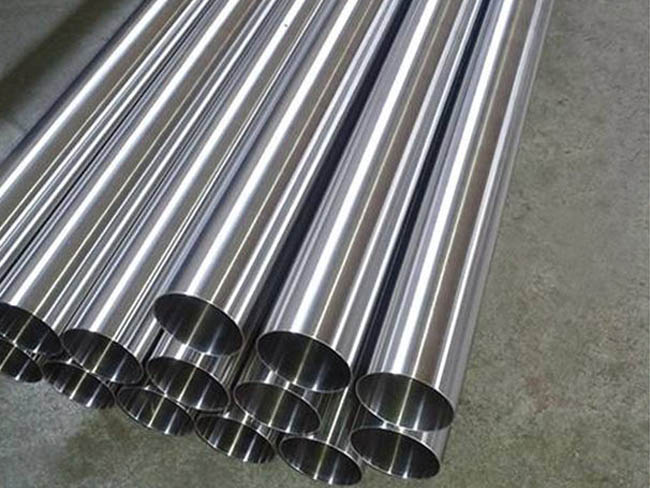
TP316 seamless stainless steel pipe offers excellent corrosion resistance and strength for chemical, marine, food, and petrochemical applications. Manufactured to ASTM A312, A213, and EN 10216-5 standards with customizable sizes and finishes.
 02
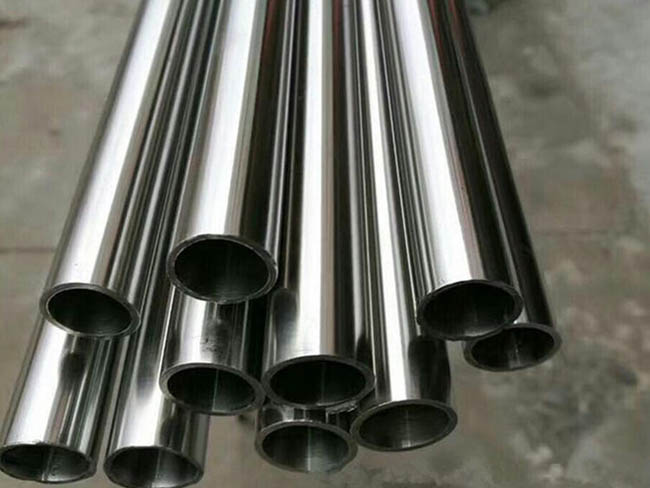
304L stainless steel pipe is produced from the low-carbon version of the widely used austenitic 18-8 stainless steel. The reduced carbon content allows it to be welded without causing localized corrosion. This is because 304L stainless steel produces less
 03
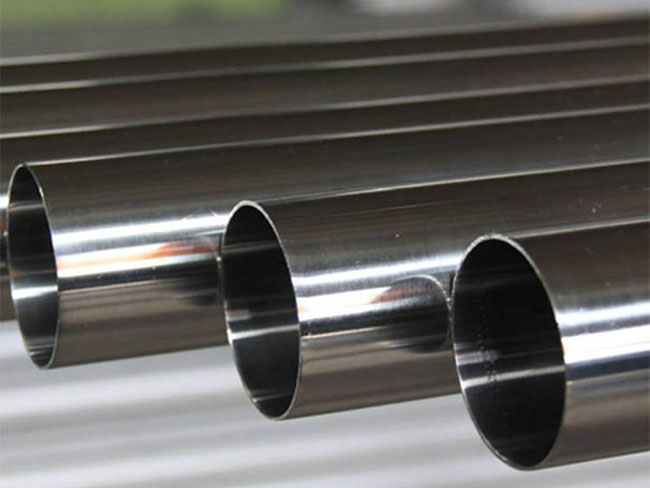
Marine seamless stainless steel pipes are manufactured from austenitic stainless steels such as 304, 304L, 316, and 316L. They feature excellent seawater corrosion resistance and high structural strength, and are widely used in ship piping systems, seawat
 04
Small diameter seamless steel tubes refer to steel pipes with a relatively small outer diameter and a seamless structure without welding joints. The typical outer diameter range is 6 mm–89 mm. These pipes are manufactured through processes such as piercin