
-
Email
-
WhatsApp
-
Address
Zhengzhou, China
Zhengzhou, China
 By Hermione
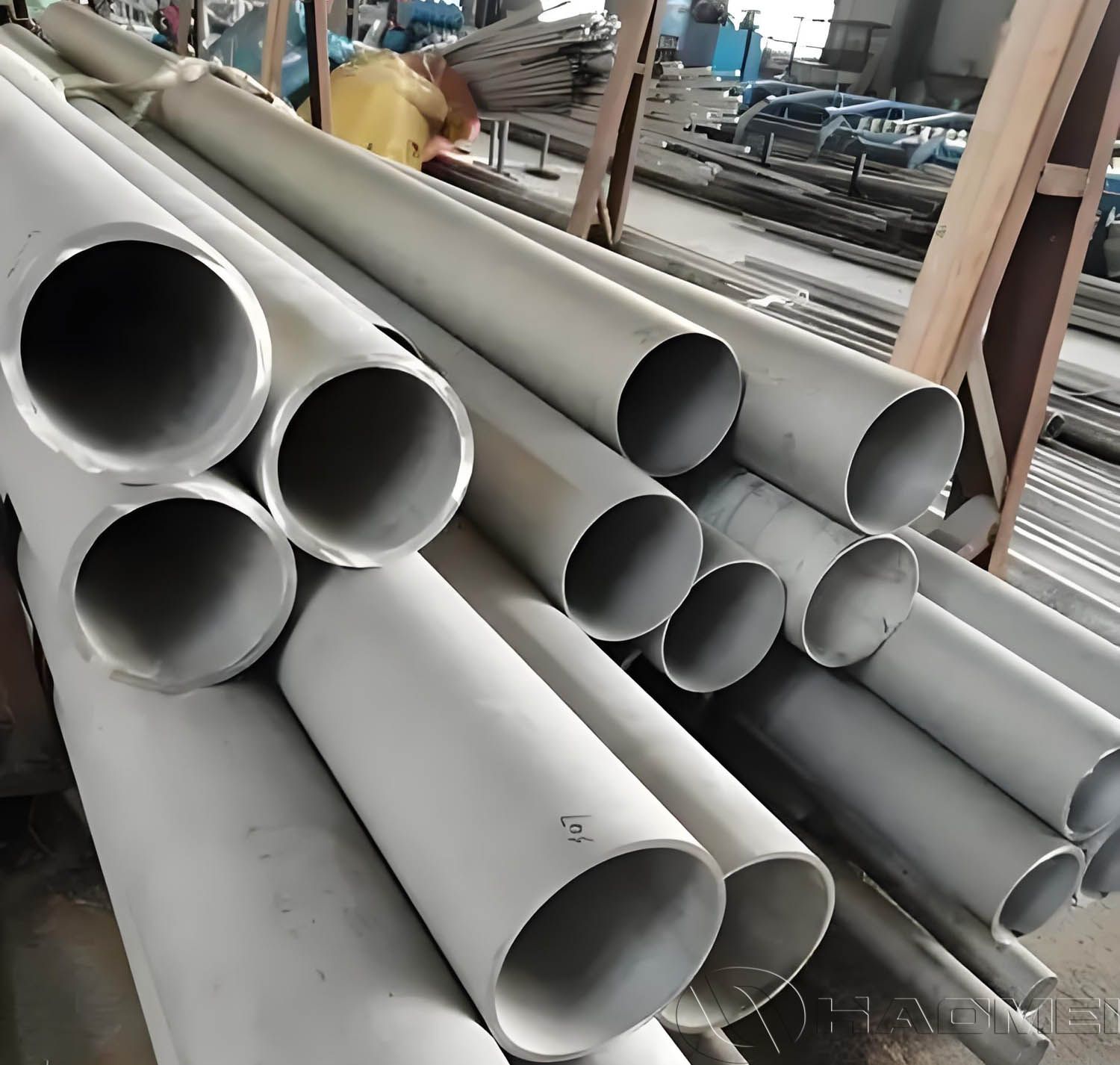
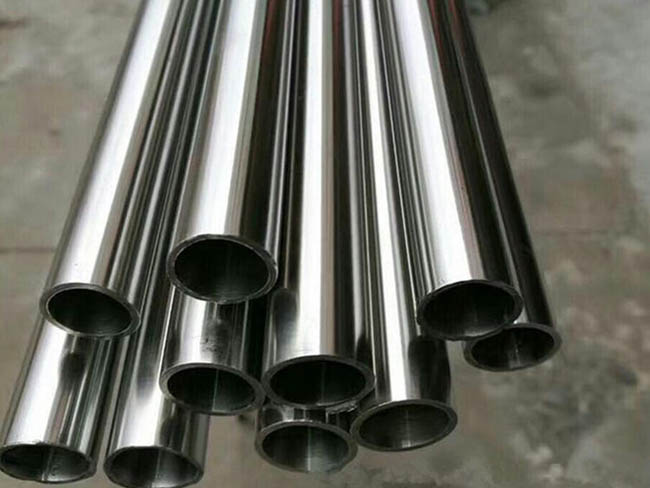
We are proud to introduce our high-quality Sch 40 304L stainless steel pipe, designed for a wide range of industrial and commercial applications. Manufactured from premium-grade 304L stainless steel, this pipe is durable, corrosion-resistant, and capable of withstanding elevated temperatures and pressure conditions. The Sch 40 wall thickness further improves its strength and reliability, making it suitable for demanding operating environments.
304L seamless stainless steel pipe is widely used in shipbuilding. With balanced mechanical properties, excellent resistance to intergranular corrosion, and reasonable cost, it has become one of the preferred materials for medium- and low-pressure marine freshwater piping systems.
304L is an austenitic stainless steel grade and can generally be regarded as the low-carbon version of Type 304 stainless steel. Compared with standard 304 stainless steel, the most notable characteristic of 304L is its lower carbon content, which provides improved resistance to intergranular corrosion after welding.
The typical chemical composition of 304L is mainly based on chromium and nickel. Its corrosion resistance relies on the formation of a dense chromium-rich passive film on the surface. These properties allow 304L to perform well in freshwater, general industrial water, low-corrosivity cooling water, and most indoor humid environments.
304L stainless steel pipe for marine freshwater systems is manufactured using a seamless process. It is formed directly through hot-working methods such as piercing, rolling, or extrusion, leaving no welded seam in the pipe wall. For marine piping, a seamless structure eliminates the weld seam as a potential weak point and helps reduce leakage risks.
Wall Thickness Class: SCH40
SCH40, or Schedule 40, represents a standard pipe wall thickness class. It is designed to meet the pressure requirements of medium- and low-pressure fluid transportation—typically in the range of 1.0–2.5 MPa—while providing an adequate safety margin. It offers a practical balance between pipe weight and pressure resistance.
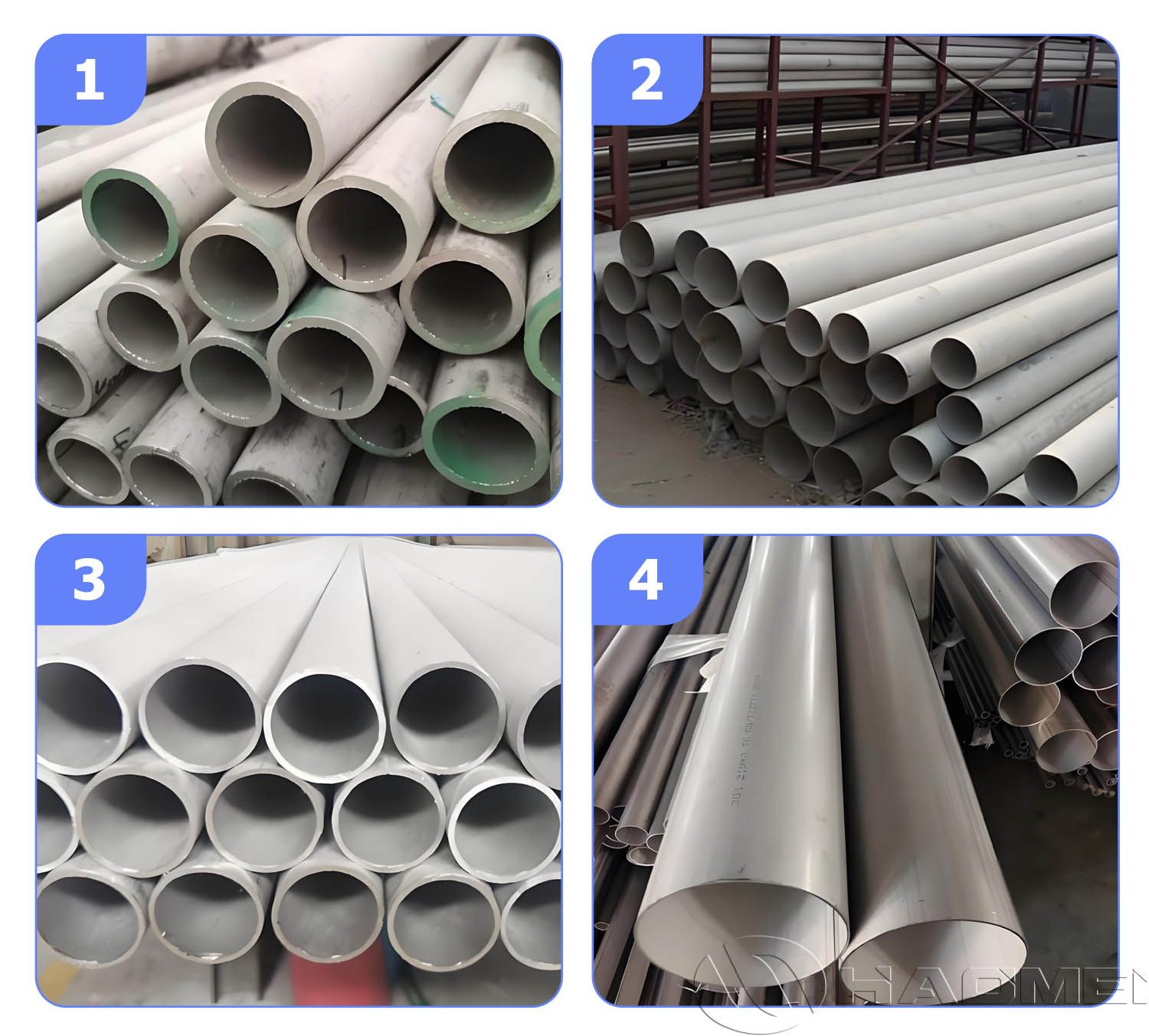
1. Good Corrosion Resistance
For conventional marine domestic freshwater, clean freshwater, or treated technical freshwater, 304L offers good corrosion resistance. Its inner surface is less likely to develop the red rust, scaling, and corrosion product shedding commonly found in carbon steel pipes. This helps maintain stable water quality and reduce flow resistance.
2. Excellent Weldability
Marine piping installation often involves on-site welding, shop prefabrication welding, and branch connections. Due to its low carbon content, 304L has a lower tendency to form chromium carbides in the heat-affected zone during welding, thereby reducing the risk of post-weld intergranular corrosion.
3. Good Mechanical Properties
304L stainless steel typically has a yield strength of ≥205 MPa, tensile strength of ≥520 MPa, and elongation of ≥40%. These mechanical properties are fully capable of meeting the strength requirements of medium- and low-pressure marine piping. Its good ductility also ensures excellent formability during bending, flaring, and other fabrication processes.
4. Hygienic and Safe for Drinking Water Transportation
304L stainless steel has a smooth inner surface that is less likely to promote bacterial growth. The material itself is non-toxic and odorless and does not release harmful substances into freshwater. Therefore, it is well suited for potable water transportation where applicable hygiene requirements are met.
5. Long Service Life and Low Maintenance Cost
304L seamless stainless steel pipe has strong corrosion resistance and can reduce the need for frequent maintenance and replacement caused by rusting. Although its initial purchase cost may be higher than that of ordinary carbon steel pipe, its overall lifecycle cost is often more favorable when maintenance, dry-docking repairs, labor replacement costs, and system reliability are considered.
Marine piping systems are classified into different piping classes according to design pressure and design temperature. Medium- and low-pressure freshwater piping generally falls into Class III piping systems, with a typical design pressure of no more than 1.6 MPa. Under these operating conditions, SCH40 wall thickness provides an adequate safety margin.
From an engineering and economic perspective, SCH40 offers an appropriate balance. It is thicker and more robust than SCH10S thin-wall pipe, providing better resistance to vibration and mechanical impact during vessel operation. At the same time, it is lighter than SCH80 heavy-wall pipe, helping control vessel weight and shipbuilding costs.
Taking NPS 2 (DN50) as an example, SCH40S has a wall thickness of 3.91 mm, while SCH80S has a wall thickness of 5.54 mm. Although SCH80S provides higher strength, the additional wall thickness, weight, and cost are often unnecessary for medium- and low-pressure freshwater systems.
It is worth noting that for larger pipe sizes above NPS 10, SCH40S commonly adopts a standard wall thickness of 9.53 mm. For marine freshwater piping, this design provides structural strength for main pipelines on large vessels while avoiding unnecessary increases in wall thickness and cost.
SCH40 is one of the most commonly selected wall thickness schedules for marine 304L seamless stainless steel pipe.
According to the ASME B36.19 stainless steel pipe dimension system, different nominal pipe sizes correspond to different outside diameters and SCH40 wall thicknesses.
| Nominal Pipe Size | Outside Diameter | SCH40 Wall Thickness |
| 1/2" | 21.34 mm | 2.77 mm |
| 3/4" | 26.67mm | 2.87mm |
| 1" | 33.40mm | 3.38mm |
| 1-1/2" | 48.26mm | 3.68mm |
| 2" | 60.32mm | 3.91mm |
| 3" | 88.90mm | 5.49mm |
| 4" | 114.30mm | 6.02mm |
| 6" | 168.28mm | 7.11mm |
| 8" | 219.08mm | 8.18mm |
The above dimensions are based on the ASME B36.19 standard. For actual procurement, the dimensions specified in the purchase order and the latest applicable edition of the relevant standard should prevail.
Depending on specific design conditions, SCH40 304L seamless stainless steel pipe may be used in a variety of marine freshwater piping systems, including:
1. Domestic Freshwater Systems
Used to deliver domestic water to crew accommodation areas, galleys, toilets, bathrooms, and other onboard facilities.
2. Potable Water Systems
For drinking water pipelines, additional confirmation may be required regarding material hygiene standards, internal surface treatment, cleanliness, and relevant project specifications.
3. Freshwater Cooling Systems
Suitable for certain equipment auxiliary cooling-water systems or freshwater circulation pipelines.
4. Freshwater Supply and Replenishment Lines
Used to connect freshwater tanks, pumps, filtration equipment, and water-use terminals.
5. Auxiliary Marine Equipment Piping
Applicable to freshwater connections for certain pump units, heat-exchange equipment, and auxiliary systems.
The final application should always be determined according to vessel design drawings, medium parameters, operating conditions, and classification society requirements.
This is a common question in marine piping procurement.
| Comparison Item | 304L | 316L |
| Basic Type | Austenitic stainless steel | Austenitic stainless steel |
| Carbon Content | ≤0.035% | ≤0.035% |
| Chromium (Cr) | 18–20% | 16–18% |
| Nickel (Ni) | 8–13% | 10–14% |
| Molybdenum (Mo) | none | 2–3% |
| General Freshwater Environment | Suitable | Suitable |
| Chloride-Containing Environment | Requires careful evaluation | More advantageous |
| Direct Seawater Exposure | Usually not preferred | Still requires careful evaluation |
| Cost | Relatively lower | Relatively higher |
316L seamless stainless steel pipe contains approximately 2%–3% molybdenum, giving it generally better resistance to pitting corrosion and chloride-induced corrosion than 304L.
Therefore, for ordinary medium- and low-pressure marine freshwater systems, 304L offers a strong balance between cost and performance. If the system involves high chloride content, salt-spray contamination, or more severe corrosive conditions, 316L or a higher corrosion-resistant material grade should be evaluated as a priority.
 01
01
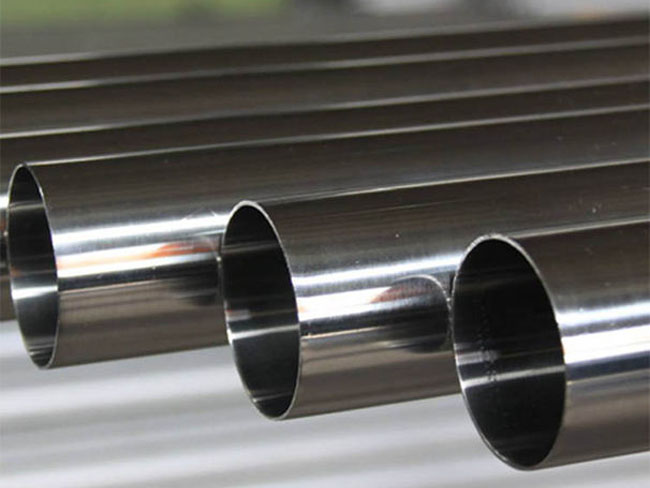
Marine seamless stainless steel pipes are manufactured from austenitic stainless steels such as 304, 304L, 316, and 316L. They feature excellent seawater corrosion resistance and high structural strength, and are widely used in ship piping systems, seawat
 02
02
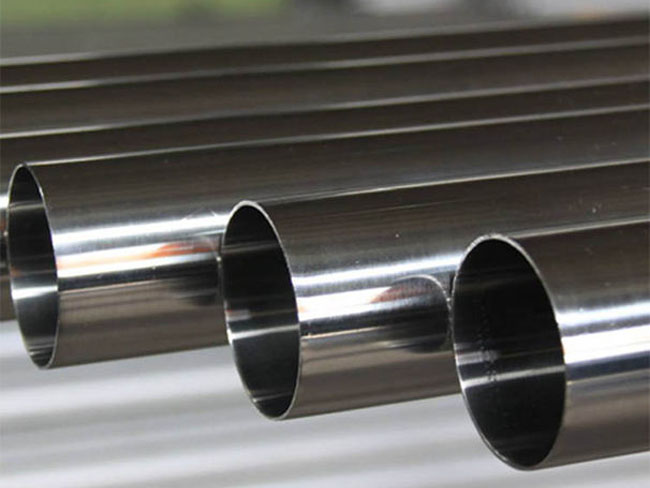
TP316L seamless stainless steel pipe conforms to ASTM A312, A213 and A269 standards, and has excellent corrosion resistance and low carbon welding performance, making it suitable for the chemical, shipbuilding, pharmaceutical and food industries.
 03
03
304L stainless steel pipe is produced from the low-carbon version of the widely used austenitic 18-8 stainless steel. The reduced carbon content allows it to be welded without causing localized corrosion. This is because 304L stainless steel produces less
 04
04
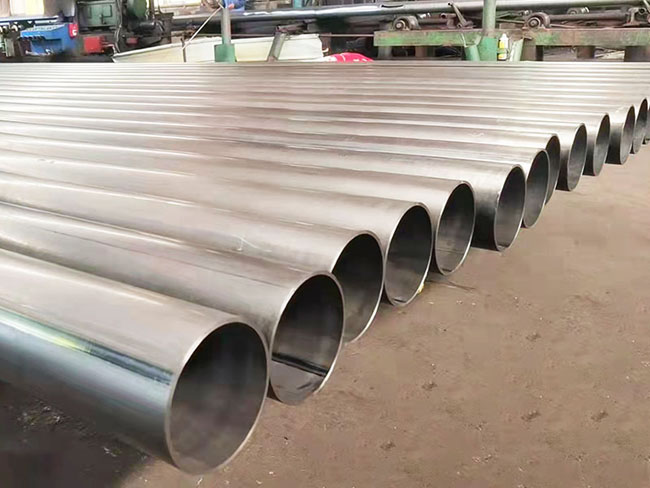
Austenitic seamless stainless steel pipe refers to seamless steel tubing whose microstructure remains stable austenite at room temperature. These steels typically use chromium and nickel as the primary alloying elements. A typical example is 18Cr-8Ni (Gra