
-
Email
-
WhatsApp
-
Address
Zhengzhou, China
Zhengzhou, China
 By Hermione
Yacht railings are among the most exposed structural components on a vessel. They are continuously exposed to sea breeze, salt spray, splashing seawater, and high-humidity conditions. At the same time, they are essential safety facilities that passengers touch frequently. Therefore, yacht railing materials must offer excellent corrosion resistance, sufficient strength, and an attractive surface finish.
In marine environments, chloride ions are a key driver of metal corrosion. They can cause localized pitting corrosion and crevice corrosion in stainless steel.
Although 304 stainless steel performs well in ordinary outdoor environments, the risk of pitting corrosion increases significantly in marine atmospheres and seawater splash zones. Compared with standard 316 stainless steel, 316L has a controlled carbon content of no more than 0.03% while retaining approximately 2.0%–3.0% molybdenum. The addition of molybdenum directly improves the material’s resistance to pitting corrosion in chloride-containing environments.
Research data indicate that 316L can achieve a pitting potential of up to 0.94 V in seawater, with a Pitting Resistance Equivalent Number (PREN) of approximately 24–26. In practical engineering applications, 316L is a preferred material for marine-grade stainless steel hardware, particularly for components requiring welding or mirror polishing. Its low-carbon composition helps reduce the risk of intergranular corrosion in the welding heat-affected zone.
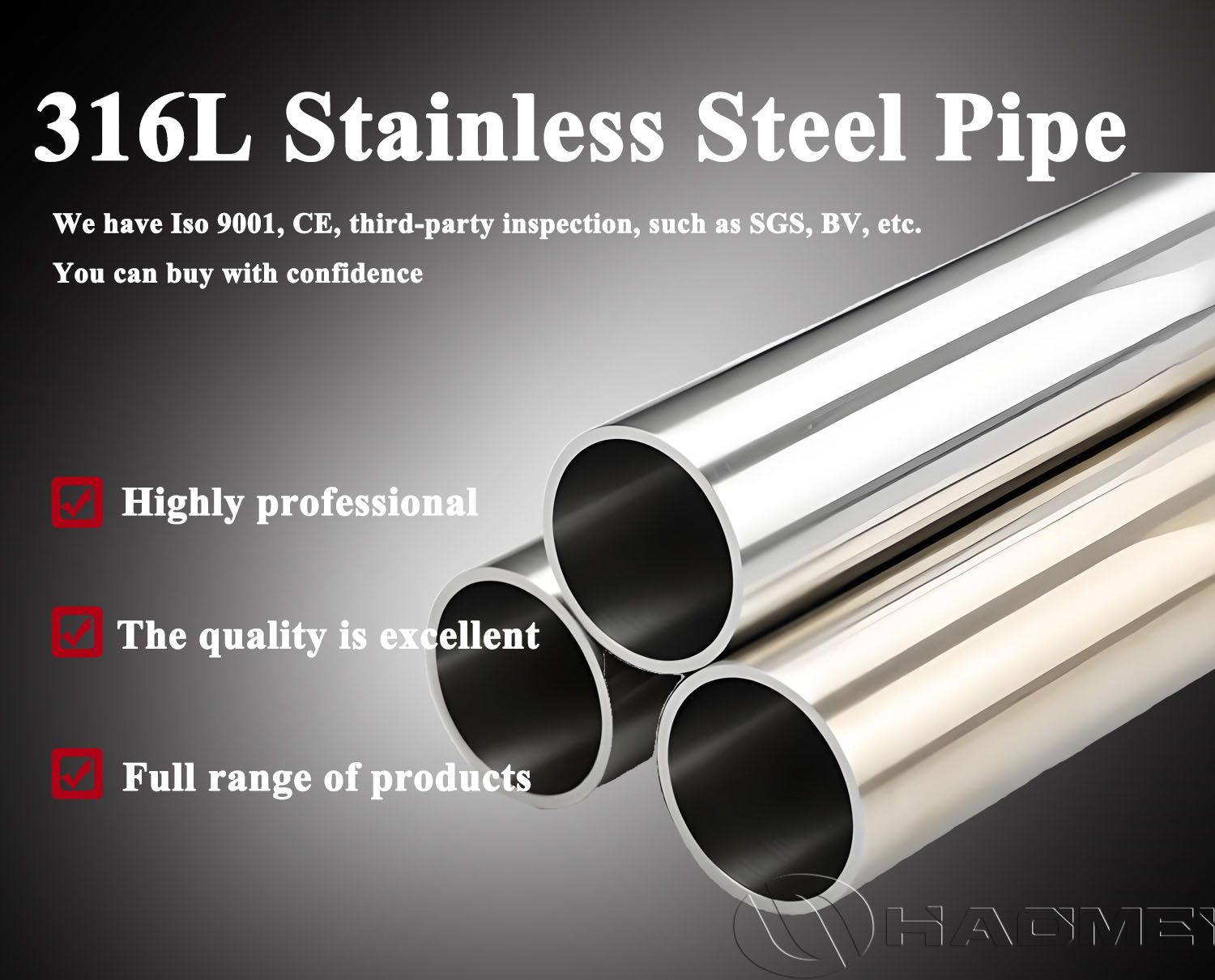
1.Excellent Resistance to Seawater and Salt Spray Corrosion
Yachts operating or moored in marine, high-humidity, and salt-spray environments are highly susceptible to chloride-ion corrosion. 316L seamless stainless steel pipe offers excellent corrosion resistance and can effectively withstand sea breeze, salt spray, rainwater, and humid conditions, providing long-term protection for yacht railing systems.
2.Mirror Polished Finish for a Premium and Bright Appearance
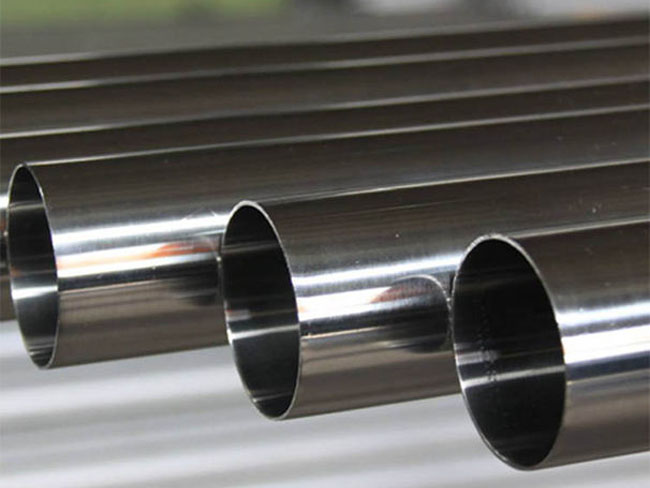
The product can be finished with high-standard mirror polishing, creating a smooth, bright surface with excellent reflectivity. It enhances the overall appearance and premium feel of yacht decks, cockpits, boarding areas, cabins, and decorative components.
The mirror surface is easy to clean and maintain. Routine wiping can help retain its attractive appearance for daily use.
3.Seamless Structure for Safety and Reliability
Manufactured using a seamless production process, the pipe has a uniform structure and good pressure-bearing performance without weld seams. This helps reduce potential risks associated with welded joints and weld-related defects.
For yacht railings and handrail structures that require high strength, refined appearance, and long-term durability, seamless stainless steel pipe is a more reliable material choice.
4.Good Fabrication and Welding Performance
316L seamless stainless steel pipe provides good fabrication performance and can meet the requirements of cutting, bending, punching, welding, grinding, and assembly.
It is suitable for manufacturing straight railings, curved handrails, bent-tube guardrails, boarding ladder handrails, seat brackets, sunshade frames, and other marine hardware components.
5.Hygienic, Environmentally Friendly, and Low Maintenance
316L stainless steel has a dense surface that is less likely to retain dirt and contaminants, making it suitable for frequently touched and outdoor applications.
Compared with ordinary coated carbon steel pipes, 316L seamless stainless steel pipe requires less long-term maintenance and can help reduce the costs of rust removal, repainting, and replacement.
Our products are manufactured in accordance with international marine-grade requirements. Cut-to-length service and pre-bending according to customer drawings are available.
| Item | Technical Specifications / Options |
| Material Grade | 316L / UNS S31603 / 00Cr17Ni14Mo2 / 1.4404 |
| Product Form | Seamless stainless steel round pipe; special-shaped pipe including oval pipe and horseshoe-shaped pipe |
| Common Outside Diameter (OD) | 19–60 mm; common yacht railing sizes include 12 mm, 16 mm, 19 mm, 22 mm, 25 mm, 28 mm, 32 mm, 38 mm, 42 mm, 48 mm, 51 mm, 63 mm, and other customized sizes |
| Common Wall Thickness (WT) | 0.8 mm, 1.0 mm, 1.2 mm, 1.5 mm, 2.0 mm, 2.5 mm, 3.0 mm, and above |
| Surface Finish | 600#–800# precision mirror polishing with protective film to prevent scratches |
| Delivery Condition | Annealed or cold-drawn |
| Applicable Standards | ASTM A312 / ASTM A269 / GB/T 14976 |
| Classification Society Certification | DNV, ABS, CCS, LR, BV, and other major classification society inspection and certification support available |
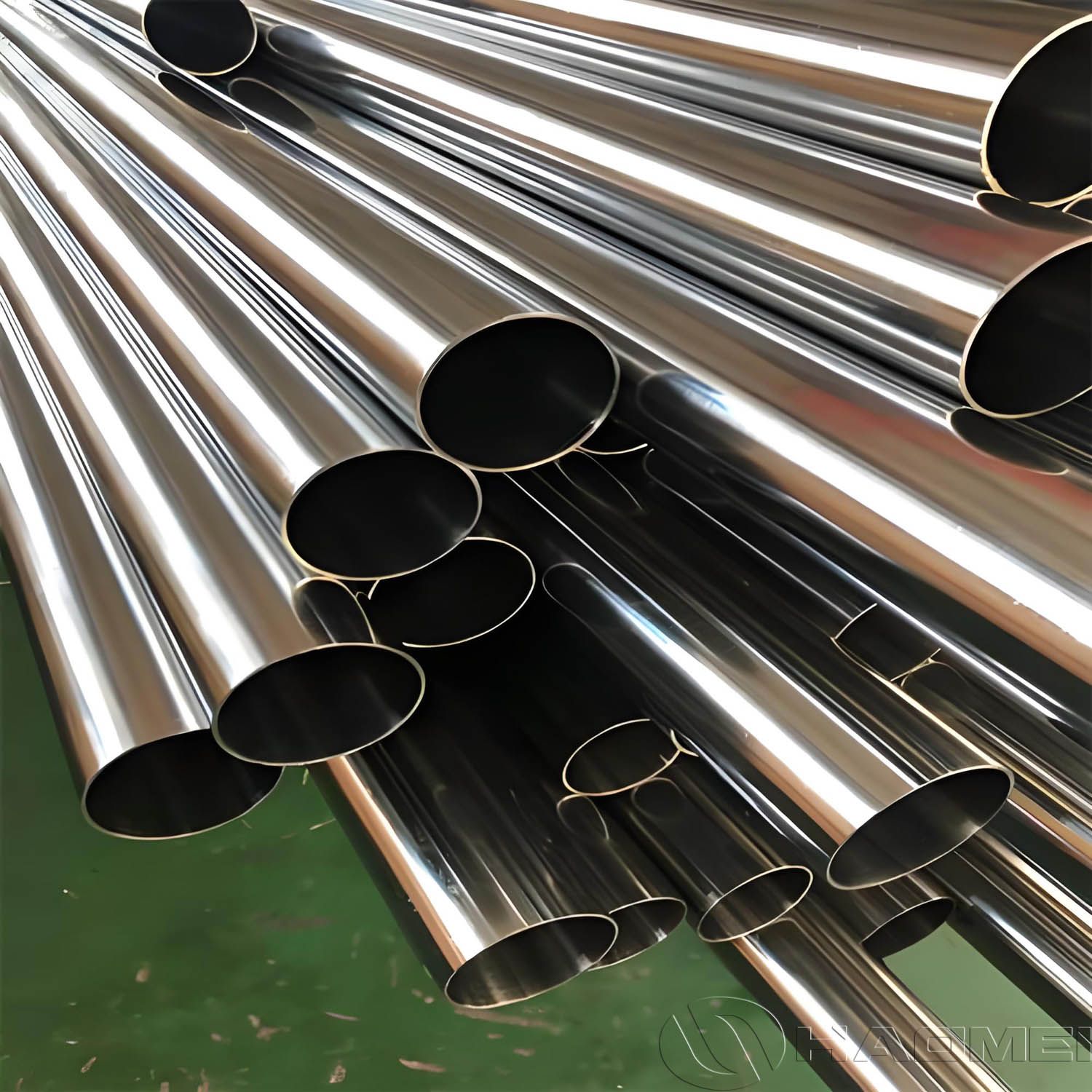
316L seamless stainless steel pipe for yacht railings undergoes fine mirror polishing. Surface roughness can be controlled to Ra 0.25 μm or below, achieving a high-grade surface quality standard.
The surface of the 316L seamless steel pipe is smooth, bright, and visually appealing, meeting the aesthetic requirements of modern yacht design. Mirror polishing not only enhances the appearance of the product but also helps reduce the adhesion of salt crystals, stains, and marine microorganisms. In addition, a refined surface can contribute to improved corrosion resistance and wear resistance.
This product is manufactured from refined stainless steel billets. After hot extrusion into tube blanks, the material is further processed through cold rolling or cold drawing to produce precision seamless stainless steel pipe.
The surface finishing process combines multi-stage mechanical grinding and electrolytic polishing. The pipe is first ground with progressively finer abrasive belts or grinding wheels. It is then electrolytically polished to remove microscopic burrs and exposed inclusion layers, resulting in a uniform, dense, highly reflective mirror surface.
Each batch undergoes a complete inspection process, including:
Chemical composition re-testing
Tensile testing
Hydrostatic testing
Eddy current testing or ultrasonic testing
Dimensional inspection
Surface quality inspection
Material Test Certificates (MTC) and third-party inspection reports can be provided upon request. Before shipment, the pipes are cleaned and carefully packed to prevent surface scratches and contamination during transportation.
Our 316L seamless stainless steel pipe for yacht railings can comply with the following international standards:
ASTM A312/A312M: Standard Specification for Seamless, Welded, and Heavily Cold Worked Austenitic Stainless Steel Pipes
EN 10297-1: Seamless Circular Steel Tubes for Mechanical and General Engineering Purposes
JIS G3459: Stainless Steel Pipes
We offer a wide range of sizes and specifications to meet different customer and project requirements.
This product is widely used in yachts, vessels, and marine-environment facilities, including:
Yacht deck railings and guardrail systems
Yacht and ship handrail pipes
Boarding ladders, gangways, and passage handrails
Interior and exterior decorative pipework for vessels
Marine seat brackets and sunshade frame structures
Railings for passenger ships, sightseeing boats, sailboats, and high-speed craft
Marina pontoons, coastal guardrails, and seafront viewing platforms
Protective railings for offshore engineering equipment
RVs, outdoor leisure facilities, and high-end architectural decoration projects
Both 304 and 316L are commonly used austenitic stainless steels. However, 316L contains molybdenum, which generally provides better pitting corrosion resistance in chloride-containing environments than 304 stainless steel pipe.
Because yachts are frequently exposed to seawater and salt spray, 316L is usually a more suitable choice for railings, handrails, and marine decorative structures requiring enhanced corrosion resistance in marine environments.
However, the final material selection should be determined based on the yacht’s operating area, service environment, design requirements, budget, and applicable classification society or project standards.
 01
01
Small diameter seamless steel tubes refer to steel pipes with a relatively small outer diameter and a seamless structure without welding joints. The typical outer diameter range is 6 mm–89 mm. These pipes are manufactured through processes such as piercin
 02
02
304L stainless steel pipe is produced from the low-carbon version of the widely used austenitic 18-8 stainless steel. The reduced carbon content allows it to be welded without causing localized corrosion. This is because 304L stainless steel produces less
 03
03
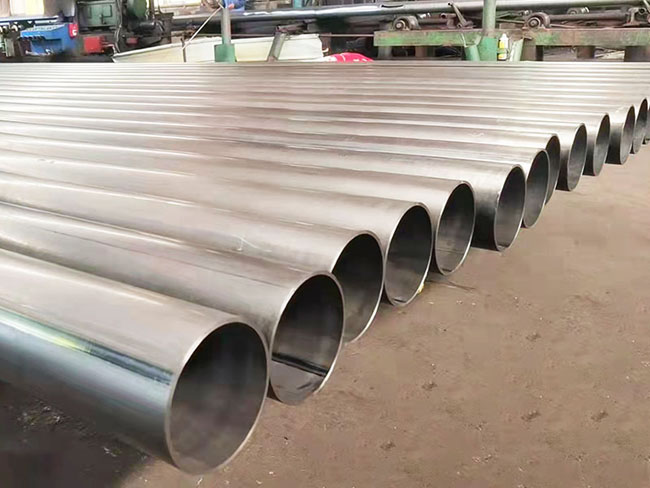
TP316L seamless stainless steel pipe conforms to ASTM A312, A213 and A269 standards, and has excellent corrosion resistance and low carbon welding performance, making it suitable for the chemical, shipbuilding, pharmaceutical and food industries.
 04
04
Austenitic seamless stainless steel pipe refers to seamless steel tubing whose microstructure remains stable austenite at room temperature. These steels typically use chromium and nickel as the primary alloying elements. A typical example is 18Cr-8Ni (Gra